Incorruptible Review (2026): Eric Ries on Why Good Companies Go Bad—and How to Build Ones That Don’t
Disclosure: MustGrabThat may earn a commission if you buy through links in this article. As an Amazon Associate, we earn from qualifying purchases. Prices and availability can change.
Quick take: Incorruptible is Eric Ries’s timely follow-up to the startup culture conversation he helped shape with The Lean Startup. This time, the question is not “How do you build something people want?” It is “How do you keep a successful organization from betraying the very principles that made it worth building?” For founders, managers, ambitious operators, and anyone trying to protect a team from bureaucracy, incentive rot, and values drift, this is one of the more useful business books to put on the 2026 reading list.
Check Incorruptible by Eric Ries on Amazon.
Why this book is timely right now
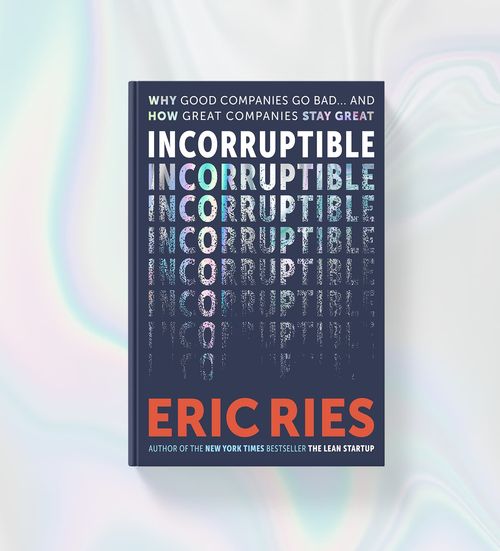
Incorruptible: Why Good Companies Go Bad…and How Great Companies Stay Great landed at a useful moment. The official book site describes it as Ries’s book about why successful companies turn on their founding values and how to build organizations that do not. The book also appeared on the New York Times Advice, How-To & Miscellaneous best-seller list dated June 14, 2026, and Eric Ries has been discussing it in book-media interviews, including New Books Network. That combination—new release, recognizable author, and a theme that hits founders, managers, and knowledge workers directly—makes it a good fit for MustGrabThat’s Books category.
It also fits the site’s practical-review lane. MustGrabThat readers tend to respond best to books that make everyday decisions easier: how to choose better, build better habits, spend money with less regret, or improve the systems around work and life. Incorruptible belongs next to books like Will Guidara’s Unreasonable Hospitality, Emma Grede’s Start With Yourself, and Seth Godin’s The Dip: it is not just a book to admire, but a book to apply.
What Incorruptible is about
The central promise of Incorruptible is simple and uncomfortable: good organizations do not automatically stay good. A company can begin with urgency, customer obsession, craft, trust, and a strong founding mission, then slowly become something colder, slower, and more self-protective. Nobody has to wake up and decide to “go bad.” The slide can happen through incentives, promotion systems, risk avoidance, metrics that reward the wrong behavior, status games, internal politics, and the gradual replacement of mission with process.
That is a compelling subject for Ries because his reputation was built around the startup phase: experimentation, feedback loops, minimum viable products, learning velocity, and disciplined iteration. Incorruptible asks what happens after the early energy works. What do you do when the small team becomes a department, the department becomes an institution, and the institution starts optimizing for survival instead of service?
At its best, the book reframes “company culture” away from vague slogans and toward design. Culture is not the framed values page, the all-hands speech, or the onboarding deck. Culture is what the system rewards when pressure rises. If the company says it values customers but promotes people who hide bad news, the culture is hiding bad news. If it says it values innovation but punishes failed experiments, the culture is anti-learning. If it says it values ownership but every meaningful decision has to crawl through committees, the culture is permission-seeking.
That lens makes Incorruptible useful even if you do not run a company. Most people work inside systems they did not create. A department can become corruptible. A nonprofit can become corruptible. A household budget, fitness plan, or personal productivity system can become corruptible when the incentives stop matching the stated goal. The business examples are the frame, but the deeper lesson is about alignment: if you want a principle to survive, design the surrounding system so that principle is easier to practice than abandon.
Who should read it
Founders and operators are the obvious audience. If you are building a company, running a team, or trying to keep a business from ossifying as it grows, this is directly relevant. Ries is writing about the dangerous middle ground between “scrappy startup” and “large institution,” where early habits either become durable operating principles or get replaced by bureaucracy.
Managers and team leads should also find value here. You may not control the whole company, but you often control the local incentive system: what gets praised, what gets ignored, what gets escalated, what gets measured, and how people are treated when they tell the truth. The book’s practical value is in making those invisible signals more visible.
Ambitious employees who want to understand office politics without becoming cynical are another good fit. Many career books tell you to work hard, communicate clearly, and build skills. Incorruptible is more structural. It helps explain why smart people sometimes act irrationally inside organizations: the system may be rewarding behavior that looks foolish from the outside but feels rational from the inside.
Readers of practical business and decision-making books should consider it if they liked the systems thinking of Same as Ever, the service design of Unreasonable Hospitality, or the ambition-and-discipline angle of Start With Yourself. This is not motivational fluff. It is more useful if you enjoy books that help you notice hidden mechanisms.
Who should skip it
Skip Incorruptible if you want a breezy personal-development book with a few simple rules you can apply by Monday morning. The topic is bigger than that. Organizational decay is messy, and the solutions are rarely as tidy as “hold better meetings” or “write better values.”
You may also want to skip it if you are looking for a narrow startup manual like The Lean Startup. This book is connected to Ries’s earlier work, but the center of gravity has shifted. It is less about product-market fit and more about institutional integrity after success arrives. If your only concern is launching a side hustle, testing landing pages, or building a first MVP, there are more direct books for that job.
Finally, readers who dislike business books built around frameworks, case studies, and big organizational claims may find the subject matter too executive-level. The book is most valuable when you are willing to translate its ideas into your own context rather than expecting a checklist to do the work for you.
The strongest idea: corruption is often a design problem
The most useful thread in Incorruptible is the idea that “going bad” is not only a moral failure. It is often a design failure. Organizations drift when the internal game becomes detached from the external purpose. People start optimizing for the scorecard instead of the customer, the promotion packet instead of the product, the quarterly theater instead of the durable result.
That is a valuable correction because it avoids two lazy explanations. The first lazy explanation is hero worship: if only the founder were still in charge, everything would be fine. The second is blanket cynicism: all companies become soulless, so why care? Ries points toward a more practical middle: institutions can be designed in ways that either protect or erode their founding intent.
For a MustGrabThat reader, this is the same reason the best practical books age well. The lesson is not merely “be good.” The lesson is “make the good behavior easier to repeat.” That is true for money systems, habit systems, health systems, and company systems. If the environment rewards the opposite of your stated goal, willpower eventually loses.
Strengths
1. The problem is real and widely felt. Almost everyone has watched a promising team get slower, more political, or more defensive as it grows. Incorruptible gives language to that frustration without reducing it to “bad leadership” or “lazy employees.” That alone makes the book useful.
2. Ries is credible on the build-versus-scale tension. Because he is so associated with early-stage innovation, his attention to the post-success problem carries weight. He is not writing as someone who only admires large institutions from a distance. He understands the romance of building—and the danger of assuming that early momentum will protect the mission forever.
3. The book encourages systems thinking. Good business books make readers ask better diagnostic questions. What behavior are we rewarding? What truth are we making hard to say? Which metric has become a substitute for the thing we actually care about? Where does process protect quality, and where does it protect status? Those are valuable questions for leaders and employees alike.
4. It pairs well with other practical business books. If The Dip helps you decide what is worth pushing through, Unreasonable Hospitality helps you think about memorable service, and The 5 Types of Wealth broadens the scoreboard for a good life, Incorruptible asks how to keep the surrounding institution from ruining the work.
Weaknesses and caveats
The biggest caveat is that books about organizational integrity can feel abstract until you connect them to a specific workplace. If you read passively, you may nod along and then change nothing. The better way to read Incorruptible is with a notebook and one team, company, or project in mind. Ask where the stated mission and the actual incentives do not match.
Another caveat: if you are not in a position of authority, some fixes may feel out of reach. You cannot personally redesign a company’s compensation system or board incentives. But you can still use the book diagnostically. It can help you understand whether a team’s dysfunction is temporary, local, or baked into the operating system. That is useful for deciding how much energy to invest—and when to leave.
Finally, readers should be cautious about turning any business book into a universal theory. Companies fail for many reasons: market changes, capital constraints, bad strategy, weak execution, bad luck, and leadership mistakes. Incorruptible is most persuasive as a lens, not as the only explanation you will ever need.
How to use the book after reading
The most practical way to use Incorruptible is to run a quick “values versus incentives” audit. Pick one value your team claims to care about—customer trust, speed, quality, honesty, experimentation, craft, or ownership. Then ask five questions:
- Who gets praised here, and for what?
- What bad news do people delay sharing?
- Which metric can be improved while the real customer outcome gets worse?
- Where has process become a substitute for judgment?
- What would a new employee conclude we truly value after watching us for two weeks?
Those questions are where the book earns its keep. You do not need to adopt every framework to benefit. You need to see the hidden scoreboard more clearly.
Buying formats and best way to read it
Incorruptible is a good candidate for print or Kindle because you may want to highlight, revisit, and discuss specific passages with a team. The audiobook may be convenient if you mostly want the big ideas during commutes, but the subject matter rewards slower reading. If you are a manager, founder, or operator, the best format is the one that makes it easiest to capture questions and turn them into a team discussion.
If you buy from Amazon, use the exact listing for the Eric Ries book so you do not land on a different title with a similar name: Incorruptible: Why Good Companies Go Bad…and How Great Companies Stay Great on Amazon.
Final verdict: should you grab it?
Yes—if you care about building or working inside organizations that stay worthy of trust. Incorruptible is not the lightest business read, and it is not meant to be. Its value is in naming a problem many people feel but struggle to diagnose: the slow gap between what an organization says it believes and what its systems actually reward.
The best readers for this book are founders, managers, team leads, operators, and ambitious employees who want to understand why good intentions are not enough. If you want a simple motivation boost, choose something else. If you want a sharper lens for spotting incentive drift, protecting mission, and asking better questions about how organizations really behave, Incorruptible is worth grabbing.
MustGrabThat rating: 4.4 out of 5. A timely, useful business book with a strong central idea: integrity has to be designed into the system before success starts testing it.
Book cover image © publisher/rights holder. Used for review/identification. Source: official Incorruptible book website.