The Calamity Club Review (2026): Kathryn Stockett’s Big, Messy Summer Read Has Book-Club Energy
FTC disclosure: This review contains an Amazon affiliate link. If you buy through that link, MustGrabThat may earn a small commission at no extra cost to you.
Quick take: Kathryn Stockett’s The Calamity Club is one of the clearest “should I join the conversation?” fiction buys of summer 2026. It is currently ranked No. 1 on Amazon Charts’ Most Read Fiction list for the week of July 12, 2026, with seven weeks on the list, and Amazon’s product page highlights it as a New York Times Editors’ Choice and a widely anticipated 2026 release. For readers who want a big, character-driven Southern novel with found-family energy, moral complications, humor, and book-club discussion fuel, it is a timely pickup.
Buy it on Amazon: Check The Calamity Club by Kathryn Stockett on Amazon.
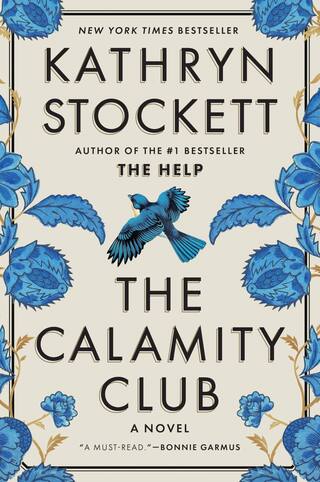
Cover credit: Book cover image © publisher/rights holder. Used for review/identification. Source: Amazon product image / Amazon Charts listing for ASIN B0DZJ53SVW.
Why The Calamity Club is worth reviewing now
Some books are “new” in the calendar sense, and some books are new in the way that matters for shoppers: people are actually reading them, recommending them, and arguing about whether the hardcover or Kindle price is worth it. The Calamity Club falls into the second category. Amazon Charts lists Kathryn Stockett’s novel at No. 1 on its Most Read Fiction chart dated July 12, 2026, after seven weeks on the list. That is a stronger signal than a one-day spike because it suggests sustained reader attention, not just release-week curiosity.
The author is also part of the reason this book feels like a real buying decision. Stockett’s The Help was one of the biggest book-club novels of its era: widely read, frequently debated, and adapted for the screen. That history creates a built-in audience, but it also raises the bar. A new Stockett novel is not just another summer fiction release; it is a question for readers who remember how much discussion her work can generate. Do you buy early, wait for paperback, borrow from the library, or skip the discourse entirely?
For MustGrabThat readers, the reason to cover it is practical. We usually look at books the same way we look at home, desk, travel, and kitchen upgrades: what problem does this solve, who is it for, what trade-offs should you expect, and when is it smarter to pass? In this case, the “problem” is choosing a substantial summer novel that feels popular enough to discuss and polished enough to justify the time. If you follow our Books coverage, this is exactly the kind of high-interest release worth sorting out before you click buy.
What the book covers
The Calamity Club is positioned as a sprawling Southern novel about women under pressure, unlikely alliances, economic strain, social performance, and the way people improvise when respectability stops paying the bills. The available publisher and retailer context emphasizes sisterhood, found family, humor, moral gray areas, and “capable women making the best” of bad circumstances. That combination matters because it tells you not to expect a tiny, quiet domestic miniature. This is pitched as a lively, talkable, character-forward story with momentum.
The early critical language around the book points to three intertwined appeals. First, there is the social world: communities where class, reputation, family history, money, and gender expectations all collide. Second, there are the women at the center of the story, whose choices appear to be shaped by both desperation and nerve. Third, there is the tone. The book is repeatedly described in terms of humor and heartbreak rather than solemn prestige-fiction distance. That is an important distinction. A novel can be serious without being airless, and this one seems designed for readers who like emotional stakes served with wit.
That also helps explain why The Calamity Club has bestseller-list gravity. Many readers want a summer novel that is not disposable but also not homework. The sweet spot is a book with enough plot to keep pages turning, enough character depth to make the ending matter, and enough social friction to support a long conversation after the last chapter. Based on its current chart performance and the way it is being discussed, Stockett’s novel is aiming squarely at that lane.
Who should buy The Calamity Club
Buy this if you want a book-club novel with obvious discussion hooks. The best book-club picks are not always the neatest books. They give people something to weigh: loyalty versus survival, generosity versus self-interest, appearance versus truth, and whether bad choices can still be understandable choices. The Calamity Club appears built for that kind of conversation. The social setting, the female relationships, and the moral pressure points should give a group more to discuss than “I liked it” or “I did not.”
Buy this if you like Southern fiction with humor and bite. The strongest signal from the book’s positioning is tone. This does not look like a sterile issue novel or a thriller wearing literary clothes. It looks like a big Southern story interested in voice, community, social rules, and women who are more resourceful than the world expects them to be. If you like novels that can be funny on one page and emotionally sharp on the next, this belongs on your shortlist.
Buy this if you want a popular novel that is not just algorithm bait. Amazon Charts momentum is useful, but popularity alone is not enough. What makes this one more compelling is the combination of wide readership, major media attention, and an author with a proven ability to write a conversation-starting story. If you want something that other readers may actually know about in July and August, The Calamity Club has a better chance than a quieter literary release.
Buy this as a gift for readers who like character drama. It is a plausible gift for fans of women-centered literary fiction, Southern settings, found-family narratives, and novels that blend warmth with trouble. If the recipient liked the emotional accessibility of authors such as Ann Patchett, Taylor Jenkins Reid, or Barbara Kingsolver’s more community-focused work, this may be a safe but not boring choice.
Who should skip it
Skip it if you want a lean thriller. The book may have momentum and schemes, but it is not being presented as a puzzle-box suspense novel. If your ideal read is built around short chapters, cliffhangers, murders, and a final twist, this probably is not the cleanest match. You may be better served by a dedicated thriller rather than a socially textured character novel.
Skip it if you dislike messy moral territory. The appeal here seems to come from people making compromised decisions under pressure. That is great for discussion, but not every reader enjoys living inside ambiguity. If you prefer novels where the heroes are plainly heroic, the villains are plainly villainous, and the lesson is clean, The Calamity Club may feel too tangled.
Skip it if you are wary of high-hype literary fiction. A No. 1 chart position can be a helpful signal, but it can also create expectations no book can satisfy. If you tend to bounce off major “everyone is reading this” titles, consider sampling the opening on Kindle or waiting for a library copy before buying the hardcover.
Strengths
The timing is excellent. A summer fiction pick benefits from being easy to recommend right now. The Calamity Club has active chart momentum, enough weeks on the Amazon list to suggest persistence, and a premise that feels suited to vacation reading, book clubs, and gift tables. It is not merely a backlist classic being rediscovered; it is a current conversation.
The audience is clear. Some novels are hard to place. This one is not. It is for readers who like voice-driven commercial literary fiction, women-centered ensemble stories, Southern atmosphere, and moral mess. That clarity is useful because it makes the buy/skip decision easier.
It has discussion value beyond the plot. The most useful fiction purchases are often the ones that stick around after the ending. A book-club novel does not need to be universally loved; it needs to create disagreement worth having. Economic hardship, public respectability, found family, social judgment, and survival choices are all durable discussion topics.
The format options help. Because Amazon lists Kindle availability for ASIN B0DZJ53SVW and the chart entry also points readers toward sample and audiobook options, shoppers do not have to default to a full-price hardcover. That matters for a long popular novel: some readers will want the physical book, while others should sample digitally first.
Weaknesses and caveats
The Stockett name brings expectations and baggage. Many readers will arrive because of The Help, and some will arrive skeptical for the same reason. That is unavoidable. If you are hoping for a book that can be read in a vacuum, this one may come with more author-context conversation than you want.
Big social novels can sprawl. The same ingredients that make a book club-friendly novel appealing can also make it feel crowded: multiple relationships, community tensions, reversals, comic turns, and emotional backstory. Readers who prefer spare prose and narrow focus may find the package too busy.
Popularity is not the same as fit. Amazon Charts tells us people are reading it, not that every MustGrabThat reader should buy it. If your current reading mood is practical nonfiction, a short self-improvement book, or a fast thriller, this may sit unfinished no matter how many lists it tops. For a more practical nonfiction lane, browse our recent reviews like The Next Conversation review or How to Win Friends and Influence People review.
Buying formats: Kindle, hardcover, audiobook, or library?
Kindle is the low-friction choice. If you are curious because the book is trending but not yet convinced it belongs on your shelf, start with the Kindle sample or digital edition. That lets you test the voice and pacing quickly. For a novel where tone matters so much, the sample is more useful than a plot summary.
Hardcover makes sense for gifting and book clubs. If you are buying for someone who likes current literary fiction, the hardcover is the more giftable format. It also makes sense if your book club is reading it soon and you want an easy physical copy to mark up and pass around.
Audiobook could be the sleeper format. Southern fiction often lives or dies by voice, rhythm, and dialogue. If the narration sample works for you, audiobook may be the most enjoyable way to experience the humor and character dynamics. Just sample first, because narrator preference is personal.
Library is smart if you are hype-resistant. If you mainly want to understand the conversation, not own the book, a hold at the library is reasonable. The only downside is timing: a No. 1 charting novel may have a long wait list during peak buzz.
Final verdict: should you grab it?
The Calamity Club is a strong grab for readers who want a timely, popular, discussion-ready novel with Southern atmosphere, women under pressure, humor, and moral mess. The current Amazon Charts ranking makes it one of the safer “everyone is reading this” fiction picks of the moment, while Stockett’s name gives it enough built-in interest to keep the conversation going beyond release week.
It is not the right buy if you want a stripped-down thriller, a quiet minimalist novel, or practical nonfiction you can apply by Monday morning. But if you want a summer 2026 novel that feels alive in the marketplace and likely to generate real book-club discussion, The Calamity Club earns its spot near the top of the list.
Bottom line: Buy it if you want a big, current, character-driven summer read. Sample first if you are unsure about the hype. Skip it if your reading mood calls for speed, simplicity, or clean heroes.