Hidden Potential Review (2026): Adam Grant on How People Really Improve
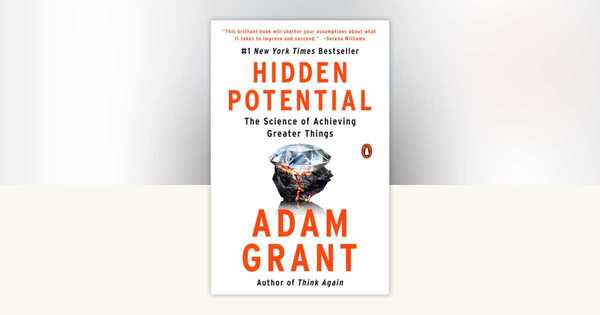
Hidden Potential: The Science of Achieving Greater Things is Adam Grant’s argument against lazy talent myths. Instead of treating high performance as a gift some people are born with and everyone else can only admire from a distance, Grant makes the case that growth is usually built through character skills, better systems, and the willingness to keep learning while being visibly imperfect. That makes this a more useful book than the average success title, especially for readers who are tired of genius worship but still want practical motivation.
Quick take: If you want a smart, research-backed personal development book that focuses on how ordinary people improve over time, Hidden Potential is one of the better Amazon buys in the category right now.
Check current price and formats on Amazon
Shop Hidden Potential on Amazon
TL;DR
Hidden Potential says we consistently overrate natural talent and underrate the process of improvement. Grant argues that people rise further not just because they work harder, but because they learn better, build stronger character skills, and operate inside environments that help them develop. The book is strongest when it turns abstract ideas like resilience, coachability, and deliberate practice into memorable stories and surprisingly usable mental models. It is weaker when it brushes past structural realities or when its examples make growth feel cleaner and more linear than it usually is in real life. Overall, I think it is worth buying for ambitious readers, managers, teachers, parents, and anyone trying to get better at something difficult without turning their life into a joyless grind.
Who it’s for
- Readers who like evidence-backed self-improvement books but do not want empty hustle slogans.
- Managers, teachers, coaches, and parents who care about helping other people improve, not just measuring current performance.
- Professionals who feel underrated, late-blooming, or stuck in the shadow of seemingly more “gifted” peers.
- Fans of thoughtful books like Deep Work, and Clear Thinking.
Who should skip
- Readers who want a rigid step-by-step system with worksheets, habit trackers, and a neat 30-day plan.
- Anyone who is already allergic to anecdote-heavy business and psychology books.
- People looking for a book focused primarily on policy, institutions, or structural inequality rather than individual and team development.
- Shoppers who want a narrower skills manual, in which case a more tactical title may serve them better than Grant’s broader framework.
Key ideas
The core idea is simple but useful: potential is not best judged by where someone starts, but by how far they can climb. Grant pushes back on the common habit of rewarding polish, precocity, and early ease. He argues that many of the traits that matter most in real achievement are not raw IQ flexes but what he calls character skills, things like persistence, discipline, adaptability, humility, and the ability to keep learning after mistakes.
Another big idea is that discomfort is not a sign you are failing. In many cases it is a sign you are learning. Grant repeatedly returns to the value of being a beginner, accepting awkwardness, and staying coachable instead of protecting your ego. That makes the book land especially well for readers who have been trained to avoid embarrassment or to treat slow progress as proof they are not built for the work.
He also spends time on systems, not just individuals. Good cultures, mentors, teams, and teachers expand potential by creating chances for overlooked people to grow. Grant is at his best when he shows that strong performance often comes from environments that make feedback safe, practice repeatable, and improvement visible.
If you are shopping formats, it is worth comparing the main hardcover listings, the audiobook options, and Grant’s broader book catalog on Amazon before buying.
What it gets right
- It is a welcome corrective to talent worship. A lot of readers need exactly this reminder.
- Grant is good at making research readable. The book rarely feels like homework even when it is summarizing studies and patterns.
- The coaching lens is strong. One of the book’s most useful threads is the difference between judging current weakness and developing future capacity.
- It is motivating without sounding like an internet motivational poster. That is harder than it looks.
What it gets wrong, or at least thin
- It can underplay structural constraints. Opportunity is not distributed fairly, and the book only partially grapples with that.
- Some stories feel smoother than real life. Progress is often messier than business-book case studies make it seem.
- The strengths-versus-weaknesses tension stays unresolved. There is a real question about when to build weak areas and when to lean harder into natural advantages.
- Readers wanting a highly operational system may feel underfed. The book offers strong framing more than a strict program.
Practical takeaways
My biggest takeaway is to stop treating early ease as the best predictor of eventual excellence. If you manage people, hire people, teach people, or are simply evaluating yourself, it is smarter to watch for rate of improvement, response to feedback, and willingness to stay in the discomfort zone. Those signals often matter more than who looked impressive on day one.
Second, build practice environments that lower the ego cost of learning. Grant’s examples keep pointing back to the same truth: people get better faster when mistakes are expected, feedback is specific, and progress is measured over time. That applies whether you are training for a promotion, learning to speak publicly, building fitness, or trying to write more clearly.
Third, think like a coach, not just a critic or cheerleader. Critics attack weakness. Cheerleaders celebrate strengths. Coaches look for unrealized capacity and create the next useful challenge. That is an excellent lens for leading others and for talking to yourself. I like that the book turns self-improvement away from shame and toward better design.
Finally, use this book as a lens rather than a religion. Read it to question fixed assumptions about talent, then pair it with more tactical books when you need a concrete operating system for habits, deep work, or decision-making.
Similar books
- Thinking in Bets for better decisions under uncertainty.
- Deep Work for focused skill-building once you know what matters.
- Slow Productivity if you want ambition without constant self-punishment.
- The Creative Act if you want a more reflective, less research-heavy approach to creative growth.
Sources
- Penguin Random House book page: penguinrandomhouse.com/books/719611/hidden-potential-by-adam-grant/
- Adam Grant official book page: adamgrant.net/book/hidden-potential/
- Inside Higher Ed review discussing strengths and institutional limits: insidehighered.com/…/review-adam-grants-hidden-potential
- Amazon search results for availability and formats: amazon.com/s?k=Hidden+Potential+Adam+Grant
FTC disclosure: This post contains affiliate links. If you buy through them, Must Grab That may earn a commission at no extra cost to you.