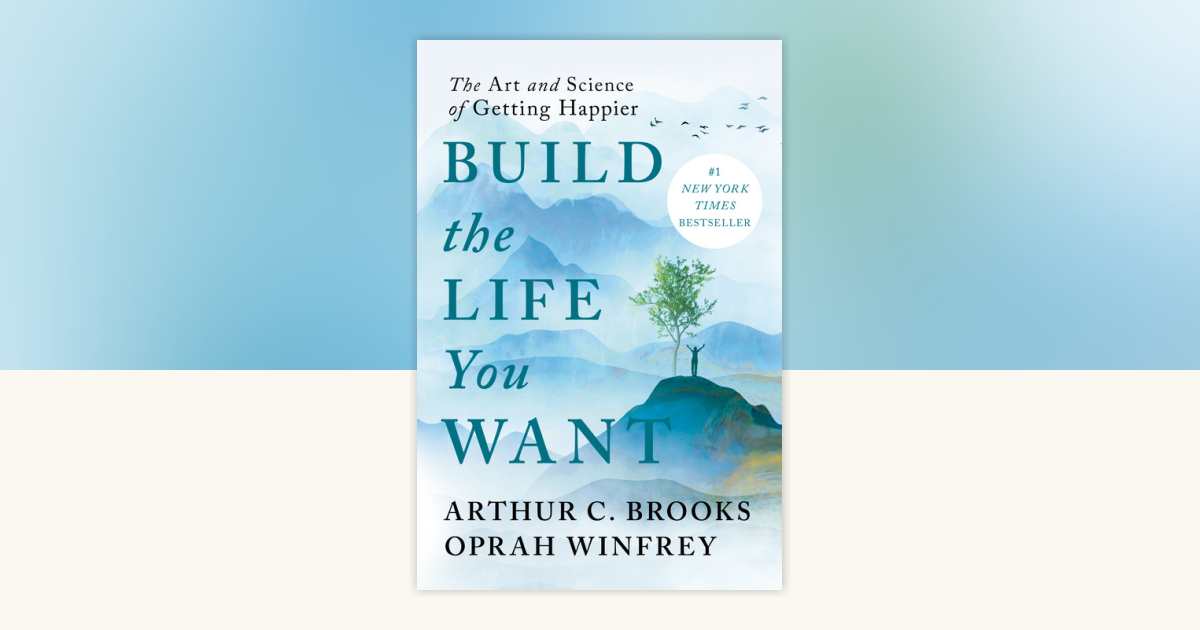
Build the Life You Want Review (2026): Arthur C. Brooks and Oprah on the Science of Getting Happier
TL;DR: Build the Life You Want is a readable, research-forward happiness book that tries to turn well-being into something more practical than vague positivity. Arthur C. Brooks brings the frameworks, Oprah Winfrey brings accessibility and warmth, and together they deliver a useful primer on emotional self-management, relationships, work, and meaning. It is strongest when it translates behavioral science into simple mindset shifts. It is weaker when it drifts into broad advice that can feel more polished than deep. Still, for readers who want a mainstream, encouraging starting point for thinking more seriously about happiness, it earns its place.
Want to check the book or current price on Amazon?
See Build the Life You Want on Amazon
What this book is about
Build the Life You Want: The Art and Science of Getting Happier argues that happiness is not something you passively wait for after your circumstances improve. Brooks and Winfrey frame it as a set of habits, interpretations, and choices that can improve how you experience your life right now. The book leans on psychology, neuroscience, philosophy, and personal stories, then organizes the advice around managing your emotions and investing in four major pillars of a good life: family, friendship, work, and faith or spiritual grounding.
That pitch matters because the book is not really selling permanent bliss. Its better claim is more modest and more believable: you can become more skillful at handling your emotions, more intentional about your relationships, and more serious about meaning. That is a better promise than the usual self-help fantasy.
Who it’s for
- Readers who want an approachable introduction to the science of happiness without reading a dense academic book.
- People feeling successful on paper but emotionally flat, scattered, or undernourished.
- Fans of Arthur Brooks, Oprah Winfrey, or practical books that combine research with encouragement.
- Book clubs that want a discussion-friendly title about purpose, relationships, and emotional habits.
Who should skip it
- Readers who already know the standard happiness literature and want something highly original.
- People who prefer gritty memoir, sharper contrarian takes, or more rigorous step-by-step programs.
- Anyone allergic to polished mainstream self-help packaging.
Key ideas
The book’s foundation is that happiness is built from enjoyment, satisfaction, and meaning, not from chasing pleasure alone. Brooks spends a lot of time on metacognition, which is a fancy way of saying you should learn to observe your thoughts and emotions instead of instantly obeying them. That is one of the strongest threads in the book because it gives readers a practical gap between feeling something and becoming ruled by it.
Another recurring idea is that negative emotions are inevitable but not sovereign. The authors push readers toward gratitude, hope, humor, compassion, and perspective, not as cheesy affirmations but as trainable responses. The later sections widen the lens and argue that happiness depends heavily on the quality of your close relationships, your orientation toward work, and some kind of transcendent frame that keeps life from collapsing into pure status-chasing.
If you have read Brooks elsewhere, this will feel familiar. But it is packaged cleanly here, and the message lands: stop outsourcing your emotional life to circumstances you do not control.
What it gets right
The biggest win is tone. This book is easier to recommend than many happiness books because it avoids both relentless optimism and cold academic distance. It is kind without being mushy, and it usually remembers that readers want usable ideas, not just inspirational slogans.
It also does a good job distinguishing pleasure from deeper well-being. That sounds obvious, but a lot of modern life is engineered to make that distinction blurry. The book keeps steering the reader back toward relationships, contribution, and purpose, which is exactly where many “success” conversations fall apart.
I also like that the book treats emotional self-management as a skill. That framing is more empowering than simply telling people to “be positive.” You are not told to deny anger, envy, fear, or sadness. You are told to understand them, interrupt them, and choose better responses more often.
What it gets wrong, or at least understates
The main weakness is that some of the advice stays too high-level. The book is solid at explaining what tends to matter, but less impressive at walking readers through messy real-world constraints. It is one thing to say family and friendship are pillars of happiness. It is another to help someone rebuild those pillars while overworked, isolated, broke, caregiving, grieving, or stuck in a bad environment.
That creates a slight gap between the book’s compassion and its practicality. Some readers will also feel that Oprah’s presence is more about reach than substance. She helps make the material more inviting, but the intellectual engine is clearly Brooks. That is not a flaw by itself, though it does mean the co-author promise can feel a little uneven.
Finally, if you want a radical or deeply memorable framework, this is probably not it. The book is better as a capable synthesis than as a category-defining masterpiece.
Practical takeaways
- Notice your emotions before narrating your identity around them. “I feel anxious” is more useful than “I am an anxious person.”
- Audit your calendar for enjoyment, satisfaction, and meaning. If all three are missing, no productivity system will save the week.
- Invest in friendship proactively. The book is right that adult friendships decay when treated as optional extras.
- Stop treating work as only income or status. Look for earned success, service, and craft, even if your current role is imperfect.
- Build a simple gratitude or reflection habit, not because it is trendy, but because attention shapes experience.
Similar books
- From Strength to Strength by Arthur C. Brooks if you want a stronger Brooks book on ambition, aging, and purpose.
- The Happiness Trap by Russ Harris if you want a more methodical, therapeutic framework built around ACT.
- Four Thousand Weeks by Oliver Burkeman if you prefer a more philosophical and sharper critique of modern striving.
Final verdict
Build the Life You Want is not the deepest happiness book on the shelf, but it is a useful and well-timed one. It gives mainstream readers a calm, credible argument that happiness is less about perfect circumstances and more about practiced interpretation, emotional discipline, and relational investment. That will sound basic to some readers, but “basic” is not the same as unhelpful. Plenty of people do not need a more complicated theory. They need a clearer one, repeated well enough that they might actually use it.
If that sounds like you, this is a worthwhile read. If you already live in the happiness-and-habits section of the bookstore, you may admire it more than you love it. Either way, it is a respectable bridge between science-backed well-being advice and general readers who want something practical, readable, and encouraging.
Sources
- Penguin Random House listing for Build the Life You Want
- Arthur C. Brooks book page
- Goodreads reader reviews and metadata
FTC disclosure: This post contains affiliate links. If you buy through them, Must Grab That may earn a commission at no extra cost to you.