Clear Thinking Review (2026): Shane Parrish on Better Decisions Before the Pressure Hits
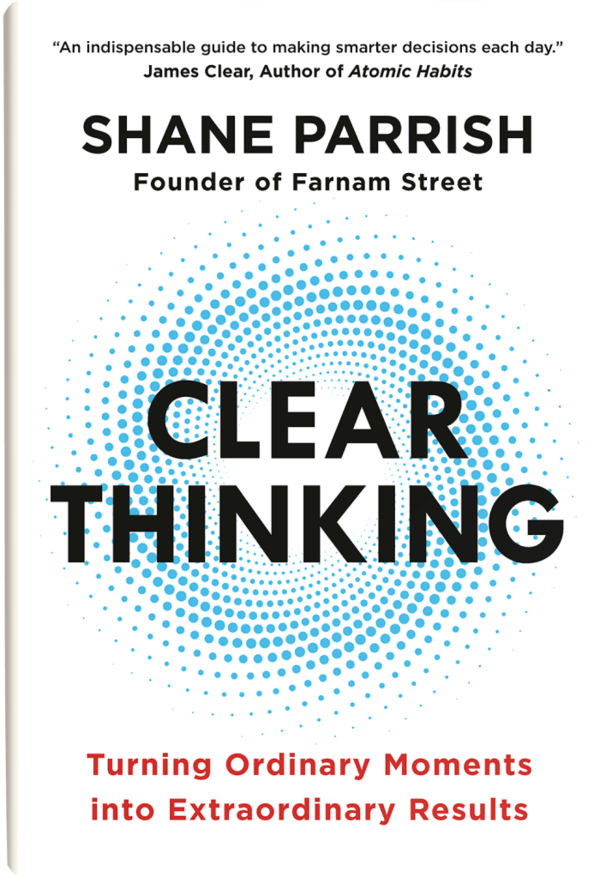
Clear Thinking: Turning Ordinary Moments into Extraordinary Results is Shane Parrish’s attempt to solve a frustratingly common problem: most bad outcomes do not come from a lack of intelligence, they come from reacting badly in key moments. Parrish’s central claim is that better results come less from being naturally brilliant and more from recognizing the moments that matter, then creating conditions that help you respond deliberately instead of impulsively.
TL;DR: This is one of the more useful modern decision-making books for people who like practical mental models more than abstract psychology. It is strongest when Parrish explains how defaults, environment, and positioning shape outcomes before a big decision ever arrives. It is weaker when it repeats familiar self-improvement ideas in slightly polished language. Still, if you want a readable guide to making fewer dumb mistakes under pressure, this is worth your time.
Check current prices, formats, and reader reviews for Clear Thinking on Amazon.
Amazon quick take: If you want a decision-making book that is practical, readable, and immediately applicable at work or at home, Clear Thinking is an easy recommendation.
What this book is about
Parrish argues that the biggest gains in life often come from what happens in short, pivotal windows between stimulus and response. Those are the moments where emotion, ego, social pressure, fatigue, and habit can take over. His answer is not “just be more rational.” Instead, he focuses on building systems, rules, and environments that make rational behavior easier when the stakes rise.
The book spends a lot of time on what Parrish calls defaults, the built-in tendencies that hijack judgment. These include emotional defaults, ego defaults, social defaults, and inertia defaults. The broader lesson is useful: if you only try to think clearly in the heat of the moment, you are already late. Better decisions come from preparation, not heroic last-second discipline.
Who it’s for
- Professionals who make people, money, hiring, or strategy decisions under pressure.
- Founders, operators, managers, and ambitious generalists who like mental-model style books.
- Readers who enjoyed books by James Clear, Annie Duke, Morgan Housel, or Cal Newport.
- Anyone who feels they know what the smart move is, but too often fails to do it at the crucial moment.
Who should skip it
- Readers who want dense academic behavioral science with citations on every page.
- People who already consume a lot of decision-making and productivity content and want something radically new.
- Anyone looking for a narrow book about investing, negotiation, or leadership only. This is broader than that.
Key ideas
1. The moment before action matters most.
Parrish keeps returning to the tiny gap between what happens to you and what you do next. That gap is where outcomes change.
2. Defaults run your life unless you redesign them.
When you are tired, stressed, rushed, flattered, threatened, or trying to fit in, your default settings take over. The book is especially good at showing how invisible those defaults can feel from the inside.
3. Positioning beats brilliance.
One of the strongest themes in the book is that the best decision-makers avoid bad situations before they arrive. They do not rely on willpower as much as they rely on setup. Good position makes decent decisions easier. Bad position makes even smart people look foolish.
4. Rules can protect you from yourself.
Parrish recommends pre-decided rules, filters, and constraints. These reduce the odds that you will improvise badly when emotions are high.
5. Recovery matters too.
Even thoughtful people mess up. The book is solid on noticing errors early, correcting course, and not compounding a mistake out of pride.
What it gets right
The biggest strength here is usability. Parrish is not merely trying to impress you with smart observations. He wants you to change how you make decisions tomorrow. That makes the book accessible, especially for readers who bounce off drier books in psychology or philosophy.
It also does a strong job translating abstract ideas into lived reality. Social pressure, status concerns, defensiveness, and habit loops are not treated like edge cases. They are treated as the main event, which is refreshingly honest. Most people do not make bad choices because they lack information. They make bad choices because they get triggered, cornered, tired, ego-driven, or rushed.
I also like the emphasis on positioning. That concept connects personal behavior with strategy in a way many self-help books miss. The lesson is simple but powerful: many “decision” problems are really setup problems. Put yourself in better environments, create buffers, and reduce forced choices, and a lot of errors disappear before they happen.
What it gets wrong, or at least overstates
The downside is that some of the book’s ideas will feel familiar if you read widely in the modern business and self-improvement space. There are echoes of behavioral economics, habit design, stoicism, and checklist thinking throughout. Parrish packages them clearly, but not every insight lands as genuinely new.
There is also a mild tendency toward polished clarity that can make real life seem tidier than it is. In practice, many high-stakes decisions are ambiguous, political, emotional, and information-poor all at once. The book acknowledges this, but its frameworks sometimes feel cleaner than reality.
Finally, while the book is practical, some readers may want even more concrete worksheets, templates, or decision audits. You get principles and examples, which is valuable, but not always a highly structured operating manual.
Practical takeaways
- Create rules before pressure hits, especially for spending, hiring, email, conflict, and deadlines.
- Audit where your worst decisions happen. Time of day, people involved, emotional triggers, and environment all matter.
- Reduce forced decisions by building margin into your calendar, finances, and commitments.
- When emotions spike, delay the response if the decision is reversible.
- Design your environment so the good move is easier than the bad move.
- Review mistakes for setup failures, not just judgment failures.
If you want companion formats or related editions, Amazon usually has hardcover, Kindle, and audiobook search results worth comparing: hardcover search, Kindle search, and audiobook search.
Similar books
- Thinking in Bets by Annie Duke, for uncertainty and decision quality.
- Atomic Habits by James Clear, for behavior design and systems.
- The Psychology of Money by Morgan Housel, for judgment under emotion and uncertainty.
- Deep Work by Cal Newport, for environment design and intentionality.
Final verdict
Clear Thinking succeeds because it aims at a real problem: we often know better, yet still act worse. Shane Parrish’s best move is shifting the conversation away from raw intelligence and toward preparation, defaults, and position. That makes the book more practical than many titles in the same lane.
It is not a flawless or revolutionary book, and heavy readers in this category will spot overlap with other popular thinkers. But for most people, that is not a deal-breaker. Clarity and usefulness beat novelty for novelty’s sake. If you want a book that can help you make fewer avoidable mistakes and build better conditions for good judgment, this is a strong pick.
Sources
- Penguin Random House book page for Clear Thinking: https://www.penguinrandomhouse.com/books/611709/clear-thinking-by-shane-parrish/
- Farnam Street official book page: https://fs.blog/clear/
FTC disclosure: This post contains affiliate links. If you buy through them, Must Grab That may earn a commission at no extra cost to you.