The ONE Thing Review (2026): A Brutally Simple Productivity Rule That Still Works
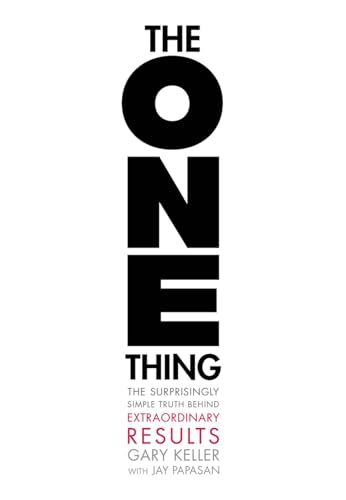
The ONE Thing by Gary Keller and Jay Papasan is a productivity book built around one big idea: extraordinary results come from disproportionate focus. Instead of trying to improve everything at once, the authors argue that you should identify the single task, project, or priority that makes everything else easier or unnecessary, then protect time to do that first. It is simple advice, almost suspiciously simple, but that is also why the book has lasted.
TL;DR: If you are drowning in options, meetings, tabs, goals, and side quests, this book is a sharp reset. Its central question, “What’s the ONE Thing I can do such that by doing it everything else will be easier or unnecessary?”, is genuinely useful. The book is strongest when it pushes you toward prioritization, time blocking, and saying no. It is weaker when it overstates how neatly life can be reduced to one lever. Still, for most busy professionals, founders, salespeople, and knowledge workers, it is more practical than most productivity books.
Ready to check the book on Amazon?
Who it’s for
- People who feel busy all day but still end the day unsure what actually moved forward.
- Managers, creators, freelancers, founders, and salespeople whose biggest problem is scattered attention.
- Readers who want a productivity book with one memorable framework instead of fifty tiny hacks.
- Anyone trying to make better tradeoffs between deep work and reactive work.
Who should skip it
- Readers looking for a rigorous scientific treatment of attention, cognition, or organizational systems.
- People who already live by aggressive prioritization and calendar blocking.
- Anyone who gets impatient with business-book repetition, because this book absolutely stretches one insight across many chapters.
Key ideas
The signature question is the heart of the book and the reason it is worth reading. Instead of making a giant to-do list and pretending every line deserves equal urgency, Keller and Papasan want you to ask what single action would create the biggest downstream effect. That framing matters because it turns prioritization from a vague feeling into a forcing function. You stop asking, “What should I do next?” and start asking, “What matters enough that other tasks can wait?”
The authors also attack several “lies” they believe derail performance: that everything matters equally, that multitasking works, that discipline must be constant, that willpower is always available, and that a balanced life is the highest goal. You do not need to agree with every claim to get value from the argument. The useful part is their insistence that high performance is usually lopsided. Big outcomes come from concentrated effort, not polite distribution of energy.
Another practical idea here is time blocking. The book argues that your most important work should go on the calendar before lower-value obligations consume the day. That sounds obvious, but most people do the reverse. They let inboxes, meetings, and low-friction tasks colonize the best hours, then wonder why strategic work keeps slipping. The ONE Thing is at its best when it pushes readers to defend prime attention instead of hoping it will survive by accident.
What the book gets right
First, it understands that productivity problems are often prioritization problems in disguise. A lot of people do not need a better app, more color-coded lists, or another morning routine. They need the courage to rank tasks honestly and ignore the false guilt that comes with not doing everything. This book is unusually good at giving permission to be selective.
Second, the framing is sticky. Years after reading it, many people still remember the central question. That matters. A usable mental model beats a pile of forgettable tips. The ONE Thing gives readers a repeatable filter for work, goals, and even relationships. If a book changes the question you ask yourself each day, it has done something meaningful.
Third, it is grounded enough to act on immediately. You can finish a chapter, open your calendar, block ninety minutes for the highest-leverage project in your life, and be better off the same day. Not every business book can claim that.
What the book gets wrong, or at least overstates
The biggest weakness is that the book sometimes oversells focus as if it can tame every messy reality. In actual life, many people have multiple non-negotiable priorities at once: work, caregiving, health, finances, admin, and relationship maintenance. The advice still helps, but it needs translation. There may be one priority inside a domain, while life as a whole remains plural and messy.
It also repeats itself. That is common in airport-business-book territory, but it is still true. The core idea is excellent. The packaging is longer than necessary. Some readers will wish the book were half the length and twice as sharp.
Finally, the book leans more on conviction than evidence. It is persuasive and intuitive, but readers who want citations, controlled studies, and nuanced discussion of cognitive tradeoffs may prefer books like Deep Work or research-heavy writing on attention and habit formation.
Practical takeaways
- Use the focusing question daily. Ask it for the quarter, the week, and today. The scale matters. Your “one thing” for a year is not your one thing for the next hour.
- Time block your best work first. Put it on the calendar before meetings and admin can swallow the day.
- Build backward from goals. The book encourages goal setting from someday to right now. That is useful because it forces present action instead of vague ambition.
- Treat saying no as a skill. Focus is not mostly about choosing what to do. It is mostly about rejecting what dilutes it.
- Expect imbalance. During high-leverage seasons, some areas will get less attention. That is not always failure. Sometimes it is the cost of meaningful progress.
Similar books
- Essentialism by Greg McKeown, for a calmer and slightly more philosophical argument about choosing less.
- Deep Work by Cal Newport, for a stronger case around concentration and cognitively demanding work.
- Make Time by Jake Knapp and John Zeratsky, for a more tactical daily system.
Bottom line
The ONE Thing is not the final word on productivity, but it is one of the clearest correctives for modern attention scatter. Its best lesson is not “do only one thing forever.” It is “identify the highest-leverage thing and stop pretending all work is equally important.” That shift alone can improve output, reduce stress, and make progress feel less random. If you read a lot of productivity books, parts of it will feel familiar and padded. If you need one memorable framework that helps you cut through noise, this is still one of the better picks.
Sources
- KellerINK book page: https://kellerink.com/products/the-one-thing
- Google Books listing: https://books.google.com/books?id=rB2ZDQAAQBAJ&printsec=frontcover
- Amazon search listing: https://www.amazon.com/s?k=The+ONE+Thing+Gary+Keller+Jay+Papasan
FTC disclosure: This post contains affiliate links. If you buy through these links, Must Grab That may earn a commission at no extra cost to you.