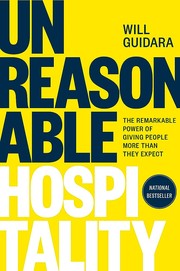
Unreasonable Hospitality Review (2026): Will Guidara on Service People Actually Remember
MustGrabThat may earn a commission when you buy through links on this page. As an Amazon Associate, we earn from qualifying purchases.
Quick take: Unreasonable Hospitality by Will Guidara is one of the rare business books that feels immediately useful outside business. It is a service book, a leadership book, and a creativity book wrapped around the story of Eleven Madison Park’s rise from excellent restaurant to world-famous hospitality machine. The core idea is simple: most people compete on product, price, speed, or polish; the memorable ones compete by making people feel seen.
Buy it here: Check Unreasonable Hospitality by Will Guidara on Amazon.
Why this book is timely right now
Unreasonable Hospitality: The Remarkable Power of Giving People More Than They Expect remains a strong fit for MustGrabThat’s Books coverage because it is still showing durable reader demand. When checked for this review, the book appeared on the New York Times Advice, How-To & Miscellaneous bestseller list with 35 weeks on the list. That is not a flash-in-the-pan launch spike; it is the kind of long-tail attention that usually means a book is being passed around by managers, founders, creators, salespeople, and readers who want work to feel less transactional.
The timing also makes sense culturally. In a world where more buying decisions are automated, outsourced, optimized, or handled through screens, the human parts of service stand out more. A small considerate gesture can feel shockingly rare. A thoughtful follow-up can beat a bigger ad budget. A team that notices details can create loyalty that a coupon cannot. That is the lane Guidara writes about: not luxury for its own sake, but the disciplined practice of making ordinary interactions feel personal.
If you have enjoyed MustGrabThat’s reviews of Chris Voss’s Never Split the Difference, Seth Godin’s The Dip, or Adam Grant’s Hidden Potential, this belongs in the same practical nonfiction shelf. It is about behavior, standards, communication, and the difference between doing the assigned task and creating an experience people remember.
What Unreasonable Hospitality is about
Will Guidara tells the story of helping transform Eleven Madison Park into one of the most celebrated restaurants in the world. But the book is not just restaurant memoir. The restaurant setting gives the lessons drama and specificity: a dining room where every detail matters, a kitchen with intense standards, guests with high expectations, and a team trying to move beyond technically correct service into something warmer and more imaginative.
The phrase “unreasonable hospitality” means going past the reasonable minimum. Reasonable service brings the order on time, answers questions politely, fixes obvious mistakes, and avoids friction. Unreasonable hospitality asks a more ambitious question: what would make this person feel genuinely cared for, surprised, or understood? That might be a custom gesture, a faster recovery after a mistake, a moment of humor, or a level of attention that says, “We noticed you.”
One reason the book works is that Guidara does not present hospitality as random niceness. He treats it as an operating system. You need hiring, training, language, rituals, standards, permission, and taste. A team cannot reliably create memorable experiences if the leader only says “be amazing” and then rewards speed alone. The memorable part has to be designed into the culture.
- Service versus hospitality: service is what you do; hospitality is how the other person feels while you do it.
- Leadership standards: the leader’s job is not only to demand excellence, but to make excellence meaningful and repeatable.
- Empowerment: teams need permission to act when they notice an opportunity to delight someone.
- Attention: small details can become competitive advantages when competitors ignore them.
- Culture: memorable experiences come from shared habits, not occasional heroic gestures.
The strongest idea: make people feel like people
The most useful takeaway is also the most obvious once you see it: people remember how an interaction made them feel. That sounds like a greeting-card lesson until you apply it to real work. Customers remember the company that solved the problem without making them beg. Clients remember the person who anticipated the next question. Employees remember the manager who gave clear standards without stripping away dignity. Readers remember the author who made a complex idea feel practical instead of condescending.
That is why Unreasonable Hospitality travels beyond restaurants. A real estate agent can use it. A dentist can use it. A software support team can use it. A wedding photographer, local gym, online store, consultant, or teacher can use it. Even if you never manage a dining room, you probably manage moments where another person is deciding whether to trust you again.
The book is especially helpful because it reframes “extra” as strategic. The point is not to spend wildly or exhaust the team with endless custom favors. The point is to identify moments where a little creativity produces disproportionate emotional return. In many businesses, the default experience is so bland that thoughtful touches do not need to be expensive to be powerful. They just need to be specific.
Who should buy it
Buy Unreasonable Hospitality if you manage people, serve customers, sell anything, run a small business, lead a team, or want a more concrete way to think about “customer experience.” It is also a good pick for creators and freelancers because the principle applies to any audience relationship. If your work depends on repeat trust, referrals, word of mouth, reviews, renewals, tips, retention, or reputation, this book gives you a more human vocabulary for building that trust.
It is also a strong gift for ambitious employees who want to stand out without turning into corporate robots. The book makes the case that noticing, caring, and following through are career advantages. Technical competence gets you in the room; hospitality can make people want you back in the room.
Readers who like story-driven business books will probably enjoy it more than readers who want a rigid checklist. Guidara uses restaurant stories to carry the lessons, so the book feels closer to a memoir with operating principles than a workbook. That makes it readable, memorable, and easier to discuss with a team.
Who should skip it
Skip it if you want a dense academic treatment of service design, hospitality economics, or organizational psychology. This is not that kind of book. It is practical, narrative, and values-driven. If you need dashboards, survey methodology, or a technical customer-success playbook, you will need a more specialized resource.
You may also bounce off the book if fine-dining stories feel too far from your world. Eleven Madison Park is an extreme environment with high prices, high staffing intensity, and theatrical room for special gestures. A solo operator, school administrator, or support agent cannot copy everything literally. The better way to read the book is to translate the principle: where can you be more attentive, more generous, and more prepared than the situation strictly requires?
Finally, skip it if your current bottleneck is not service but focus. If you already over-customize, over-deliver, and burn yourself out trying to make every client impossibly happy, pair this with a book like Greg McKeown’s Essentialism or Cal Newport’s Slow Productivity. Hospitality should raise standards, not become a socially acceptable form of self-sacrifice.
Strengths
1. The concept is memorable. “Unreasonable hospitality” is sticky because it names a behavior many people have experienced but rarely operationalized. You can bring the phrase into a meeting and people immediately understand the aspiration: not just acceptable, not just efficient, but unusually thoughtful.
2. The stories make the advice easier to remember. Business books often collapse into slogans. Guidara’s restaurant examples give the ideas texture. You see the difference between a team that completes tasks and a team that creates moments. That narrative quality makes the book easier to recommend internally because people can retell the examples.
3. It respects standards and warmth. Some leadership books lean hard into empathy and forget execution. Others worship excellence and forget humans. This book is compelling because it argues for both. You cannot create magic if the basics are sloppy, but the basics alone are not magic.
4. It is useful even for non-managers. A front-line employee can use the attention principle. A freelancer can use it in onboarding. A parent can even recognize the broader lesson: the details people remember are often the details that made them feel uniquely considered.
Weaknesses and caveats
The biggest caveat is translation. Restaurants, especially elite restaurants, are built around live experience. Many readers work in contexts with less flexibility, smaller margins, stricter policies, or digital-only interactions. The book gives inspiration more than plug-and-play implementation. You still have to decide what “unreasonable” means without breaking budgets, confusing customers, or exhausting the team.
There is also a risk that leaders misread the book as “ask employees to do more emotional labor.” That would miss the point. The best version of unreasonable hospitality requires support, autonomy, and protection from leadership. If a company wants memorable service but punishes employees for taking initiative, the culture will not hold.
Some readers may want more direct templates: scripts, measurement systems, budget rules, or exercises. The book is stronger as a mindset and culture guide than a step-by-step implementation manual. That is not a dealbreaker, but it matters if you are buying it for a team workshop and expect ready-made worksheets.
Best buying format
The hardcover is a good choice if you want to mark up passages, keep it on a business shelf, or gift it to a manager or founder. The Kindle edition makes sense if you mainly want the ideas quickly and plan to highlight examples. The audiobook may be the most convenient format for commuters, restaurant operators, salespeople, and managers who prefer story-driven nonfiction while driving or walking.
If you are buying it for a team, consider pairing the book with a simple exercise: ask everyone to identify one moment in your customer, client, guest, or employee journey where the current experience is merely adequate. Then ask what a specific, low-cost, high-attention upgrade would look like. That is where the book becomes more than inspiration.
Final verdict
Unreasonable Hospitality is worth buying if you want a practical, story-rich reminder that excellence is not only about the thing you deliver. It is about the feeling around the delivery. Guidara’s best contribution is making hospitality feel like a strategic discipline rather than a soft extra. For business owners, managers, creators, and anyone whose work depends on trust, that is a valuable shift.
It is not the most technical service book, and readers outside hospitality will need to translate the lessons. But the central idea is strong enough to survive that translation: do the job well, then look for the human detail everyone else missed. That is the kind of simple, durable advice that can change how a team works.
Bottom line: buy it if you want a more memorable, generous, and practical way to think about service, leadership, and customer experience. Skip it only if you need a technical operations manual instead of a vivid philosophy you can adapt.