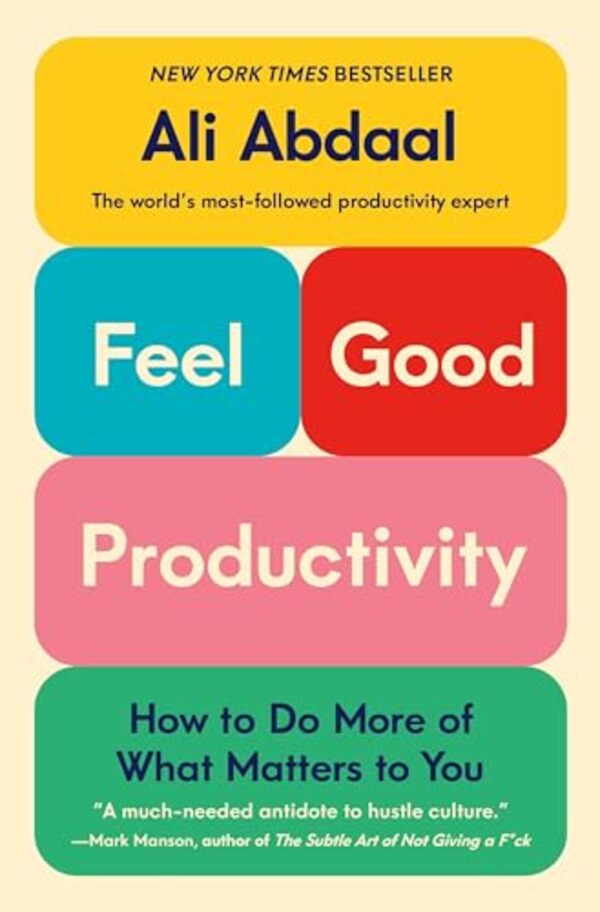
Feel-Good Productivity Review (2026): Ali Abdaal’s Case for Doing More Without the Misery
Feel-Good Productivity is Ali Abdaal’s argument that sustainable output does not come from more guilt, tighter self-punishment, or a fancier to-do list. It comes from making work feel better, so focus and consistency stop relying on constant willpower. That sounds fluffy on first pass. The book is not. It is a practical, mainstream productivity book built around a simple claim: when you feel good, you work better, and when work feels meaningful, playful, and socially connected, you are far more likely to keep showing up.
Quick take: If you’re tired of productivity advice that treats burnout like a badge of honor, this is one of the more accessible modern entries in the category.
Check current price / formats on Amazon
Shop Feel-Good Productivity on Amazon
TL;DR
Feel-Good Productivity is a readable, energetic productivity book for people who want to get more done without building their life around stress. Abdaal’s best idea is that positive emotion is not a reward you get after hard work, it is often a fuel source for doing the hard work in the first place. The book is strongest when it translates behavioral science into low-friction experiments: making tasks more fun, lowering the emotional cost of starting, and designing environments that make momentum easier. It is weaker when it repackages familiar self-help ideas with a creator-economy gloss, and readers looking for a deeply academic or highly original framework may find parts of it a little polished and repetitive. Still, for most readers, this is a useful, modern, encouraging guide.
Who it’s for / Who should skip
Best for:
- People who feel productive in short bursts, then crash.
- Knowledge workers, students, creators, and side-hustlers juggling many inputs.
- Readers who want actionable productivity advice without macho hustle rhetoric.
- Fans of books like Atomic Habits, Make Time, or Slow Productivity.
Skip if:
- You want a rigorous operations system with heavy emphasis on planning architecture.
- You dislike upbeat, anecdote-driven business writing.
- You already consume a lot of behavior-design content and need something truly novel.
What the book is arguing
Abdaal’s core move is to flip the usual story about discipline. A lot of advice says the path is simple: force yourself to work first, then maybe later you earn satisfaction. This book argues the reverse matters more in practice. Feelings like enjoyment, agency, and connection make action easier to start and easier to sustain. Instead of treating emotions as noise, Abdaal treats them as part of the operating system.
That makes the book less about squeezing every minute and more about reducing friction. He frames productivity as something powered by three broad drivers, often summarized as play, power, and people. In plain English: work is easier when it feels interesting, when you feel capable, and when you do not feel alone. From there, he works through obstacles like uncertainty, fear, and inertia, then shifts into how to maintain energy over the long term.
None of that is revolutionary on its own. What helps is the packaging. The book is structured so readers can immediately test ideas instead of admiring them. That matters because productivity books often fail at the exact thing they promise: behavior change.
Key ideas
- Positive emotion is productive. Enjoyment is not laziness. Making work lighter, more playful, or more socially engaging can increase follow-through.
- Motivation is designed, not merely discovered. Instead of waiting to feel ready, shape tasks so they are easier to begin.
- Action beats overthinking. Much procrastination comes from emotional resistance, not a lack of calendar apps.
- Confidence grows from evidence. Small wins create the feeling of capability that bigger work depends on.
- Sustainability matters. A system that works only when you are fresh, inspired, and sleeping perfectly is not really a system.
If you want alternate formats or gift options, these Amazon searches are the most useful shortcuts: hardcover edition, Kindle edition, and more books by Ali Abdaal.
What it gets right
1. It treats procrastination as emotional, not moral.
That is one of the book’s most valuable corrections. People often explain delay as laziness or poor character. In real life, delay usually comes from fear, vagueness, overwhelm, or low perceived reward. By addressing those forces directly, Abdaal makes the advice more humane and more usable.
2. It is unusually readable.
Some productivity books feel like extended LinkedIn posts. This one moves. The tone is bright, organized, and easy to absorb. That may sound like a small thing, but readability is part of usefulness. A great system trapped in a boring book is still a bad reading experience.
3. It offers experiments, not commandments.
Abdaal is at his best when he says, essentially, try this and see what changes. That lowers resistance. Readers do not need to adopt a new identity overnight. They can test one tweak: make a task more enjoyable, shrink the start point, add accountability, or create a visible win.
4. It pushes against burnout culture.
This is probably why the book has landed with a wide audience. It gives ambitious people permission to stop worshipping misery. That is a useful message, especially for readers who have confused seriousness with effectiveness.
What it gets wrong, or at least oversells
1. Some ideas will feel familiar.
If you have already read a lot of modern self-improvement, you will recognize chunks of the book’s DNA. Behavioral psychology, habit design, self-compassion, energy management, and small-step activation are not new terrain.
2. The framework can feel smoother than reality.
There are jobs, seasons, and responsibilities that are simply hard, boring, and non-negotiable. You can improve them, but not transform all of them into playful flow states. The book knows this, but its tone can sometimes imply more emotional redesign is possible than many readers will realistically have access to.
3. It is stronger on individual behavior than structural limits.
Like most books in the category, it focuses on what the reader can control. That is practical, but it can underplay workplace dysfunction, bad management, caregiving load, financial stress, or chronic health limits.
Practical takeaways
- Before forcing yourself to “be disciplined,” ask what makes the task aversive. Is it vague, lonely, too large, too boring, or tied to fear?
- Make the start smaller. A five-minute version beats an idealized ninety-minute deep-work fantasy you never begin.
- Add energy before effort. Music, movement, sunlight, a changed location, or a social check-in can shift momentum faster than another productivity app.
- Design for visible wins. Progress you can see is easier to repeat.
- Use enjoyment strategically. If a task matters and keeps stalling, make it easier or more interesting on purpose instead of treating friction as virtue.
Similar books
- Atomic Habits by James Clear, for behavior design and systems.
- Make Time by Jake Knapp and John Zeratsky, for practical attention management.
- Slow Productivity by Cal Newport, for a calmer philosophy of meaningful output.
- The ONE Thing by Gary Keller and Jay Papasan, for focus through constraint.
Final verdict
Feel-Good Productivity is not the last word on productivity, but it is one of the better mainstream entries for readers who want advice that feels modern, encouraging, and actually usable. Its main strength is not originality. It is translation. Abdaal takes a pile of already-useful ideas and turns them into a friendlier, more actionable system that many readers will apply faster than denser alternatives.
My view: this is worth reading if you are tired of treating output like a punishment. If your current approach depends on pressure, guilt, and the hope that tomorrow-version-you will suddenly become a machine, this book offers a healthier bet.
Sources
- Ali Abdaal book page and official book materials: aliabdaal.com/feel-good-productivity
- Macmillan book listing and publisher description: us.macmillan.com/books/9781250865038/feelgoodproductivity
- Amazon listing for edition and reader format details: amazon.com/…/1250865034
FTC disclosure: This post contains affiliate links. If you buy through them, Must Grab That may earn a commission at no extra cost to you.