Never Split the Difference Review (2026): Chris Voss on Negotiation Without Lazy Compromise
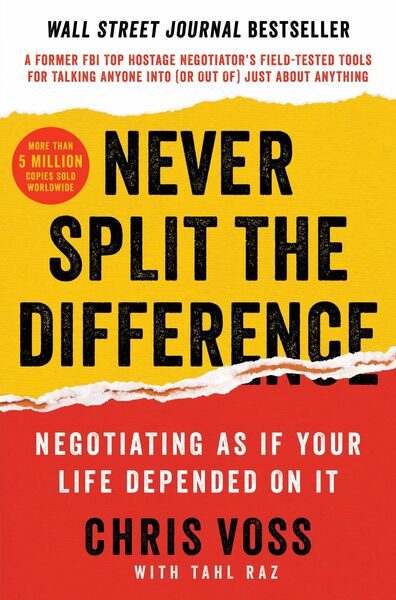
Never Split the Difference: Negotiating As If Your Life Depended On It by Chris Voss and Tahl Raz is one of those business books that keeps getting recommended because it is genuinely more practical than most. Instead of teaching negotiation as a clean, rational, spreadsheet-friendly process, it treats negotiation as what it usually is in real life: emotional, messy, ego-driven, and full of hidden motives. Voss writes from his experience as a former FBI hostage negotiator, and that background gives the book its hook, but the reason it keeps selling is simpler than the FBI angle. The techniques are concrete enough that normal people can actually try them in salary talks, client calls, home-buying decisions, team disagreements, and even awkward family conversations.
Looking up today’s price or available formats?
Check Never Split the Difference on Amazon
TL;DR
If you want a negotiation book that is memorable, actionable, and far less sterile than the usual corporate advice, this is still one of the best picks. Its biggest contribution is the idea that people do not make decisions purely on logic, so the best negotiators learn to listen hard, surface emotion, and guide the conversation with calibrated questions rather than pushing harder. Some stories are dramatic and a few ideas are repeated a bit too often, but the book earns its reputation because it gives you language you can use immediately.
Who it’s for
- People negotiating salary, freelance rates, sales terms, or job offers.
- Managers who need better ways to handle conflict without escalating it.
- Founders, operators, and consultants who spend a lot of time persuading others.
- Readers who like business books with strong anecdotes and tactical scripts.
- Anyone who feels they enter tough conversations too quickly, too defensively, or too eager to “solve” before understanding the other side.
Who should skip it
- Readers looking for a deeply academic or research-heavy negotiation textbook.
- People who dislike repeated storytelling as a teaching style.
- Anyone expecting every tactic to feel equally natural in low-stakes, everyday conversations.
- Readers who want a balanced survey of many negotiation schools rather than one highly branded framework.
What the book is about
The central argument is that successful negotiation is not about winning through relentless logic or splitting the difference to appear reasonable. Voss argues that compromise can be lazy and sometimes actively harmful because it can produce an outcome that suits neither side. Instead, he recommends tactical empathy, careful listening, labeling emotions, mirroring key phrases, and using calibrated questions like “How am I supposed to do that?” to encourage the other side to solve the problem with you.
That framing matters because many people enter negotiation with the wrong mental model. They assume being prepared means having better arguments and stronger numbers. Voss says that is incomplete. Preparation also means understanding the fears, pressures, status concerns, and hidden constraints shaping the person across the table. In other words, negotiation is less like debate and more like guided discovery under tension.
Key ideas
1. Tactical empathy beats brute-force persuasion
This is the book’s most important idea. Tactical empathy does not mean agreeing with the other side or being soft. It means demonstrating that you accurately understand what they feel and why they feel it. That lowers defensiveness and makes influence possible. In practice, this often sounds like short labels such as “It seems like timing is the real pressure here” or “It sounds like you’re worried this sets a precedent.”
2. Mirroring keeps people talking
Voss recommends repeating the last few critical words someone said, often with an upward inflection. It sounds almost too simple, but it works because it invites elaboration without confrontation. Used well, it buys time, encourages disclosure, and prevents you from talking yourself into a weaker position.
3. “No” is not the end of the conversation
Most people chase “yes” too early. Voss argues that “no” can be safer and more honest because it gives the other party a sense of control. That point is surprisingly useful in real life. People often resist because they feel cornered, not because your proposal is bad. Give them room to say no, and you often get a more truthful conversation.
4. Calibrated questions shift the work
Questions starting with “how” and “what” are used throughout the book as tools for steering the conversation without overtly dominating it. A good calibrated question forces the other side to confront feasibility, fairness, and tradeoffs. It is one of the most practical ideas in the whole book because it works in business, hiring, procurement, and personal boundaries.
5. Fairness is powerful but often strategic
One of the book’s sharper observations is that words like “fair” can be emotionally loaded and strategically deployed. People use them sincerely sometimes, but also as leverage. Voss encourages readers to notice when fairness language is doing persuasive work rather than describing an objective reality.
What it gets right
The book gets human behavior right. It understands that even sophisticated professionals carry ego, fear, insecurity, and pressure into negotiations. It also gets the sequencing right. Before numbers, before concessions, before problem-solving, there is emotional groundwork. That is the part many business books underplay.
It also deserves credit for being unusually actionable. Many nonfiction books are mostly attitude with a thin layer of tactics. This one gives actual moves, sample phrases, and recognizable mistakes. Even if you never use every technique, you come away better at slowing down, listening longer, and resisting the urge to fill silence.
Another strength is transferability. Yes, the book uses hostage negotiation stories to create drama, but the underlying lessons travel well to ordinary life. Buying a car, renegotiating a contractor quote, discussing workload with your boss, or handling a tense client all involve the same core challenge: getting someone to reveal what is really driving their position.
What it gets wrong, or at least overstates
The biggest weakness is that the FBI storytelling can occasionally oversell the universality of the framework. High-stakes crisis negotiation is memorable, but not every office or household discussion benefits from the same intensity. Some readers may also feel the book presents Voss’s preferred style as more dominant than it really is. In real negotiation, context matters. Industry norms, power asymmetry, legal constraints, and relationship history all shape what works.
It can also feel repetitive. Several ideas, especially labels, mirrors, and calibrated questions, are restated across different stories. That repetition helps the lessons stick, but it also makes the book longer than it strictly needs to be. Finally, readers who want more empirical support may find the book light on formal research compared with classics grounded in behavioral economics or organizational psychology.
Practical takeaways
- Before any hard conversation, write down the other side’s likely fears, constraints, and incentives, not just your own target outcome.
- Use one or two labels early to show understanding before you make your ask.
- Ask calibrated questions when you feel pressured instead of answering too quickly.
- Do not rush to “yes.” A thoughtful “no” or a hesitant pause often reveals more than quick agreement.
- Watch for the word “fair.” Clarify what the person actually means by it.
- Let silence do some work. People often reveal more when you stop filling the gap.
Similar books
- Getting to Yes by Roger Fisher and William Ury for a more classic, principle-based negotiation framework.
- Crucial Conversations if your main challenge is emotionally loaded conversations at work or home.
- Thinking in Bets by Annie Duke if you want a strong companion book on uncertainty and decision quality.
Final verdict
Never Split the Difference is still worth reading because it does something rare: it changes how you hear conversations. After reading it, you start noticing how often people want acknowledgment before solutions, how often the real objection is unstated, and how often the best move is a question instead of a counterargument. It is not the final word on negotiation, and it occasionally leans too hard on its own legend, but it is absolutely one of the most useful entry points for anyone who wants to get better at hard conversations without becoming robotic or aggressive.
If your job, business, or life regularly puts you in moments where stakes feel high and emotions run hotter than logic, this is an easy recommendation.
Sources
- HarperCollins Canada book page for publication details and publisher description: HarperCollins Canada
- Amazon listing for format availability and reader market context: Amazon
- Google Books listing for bibliographic and preview context: Google Books
FTC disclosure: This post contains affiliate links. If you buy through them, Must Grab That may earn a commission at no extra cost to you.