Future Rich Person Review (2026): Haley Sacks’ Judgment-Free Money Reset for Beginners
MustGrabThat may earn a commission when you buy through links on this page. As an Amazon Associate, we earn from qualifying purchases.
Quick take: Future Rich Person by Haley Sacks — better known online as Mrs. Dow Jones — is a timely personal-finance reset for readers who know they should be investing, saving, and planning, but still feel stuck between high rent, lifestyle pressure, confusing advice, and the fear that they are already behind. It is best for beginners and early-intermediate money learners who want a modern, non-shaming framework rather than another spreadsheet sermon.
Buy it here: Check Future Rich Person by Haley Sacks on Amazon.
Why this book is timely right now
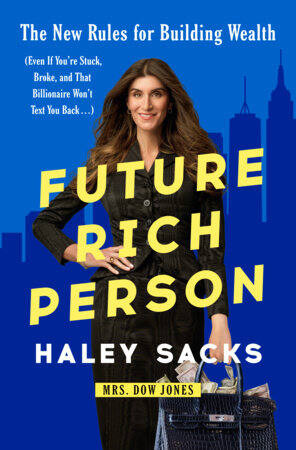
Future Rich Person: The New Rules for Building Wealth (Even if You’re Stuck, Broke, and a Billionaire Won’t Adopt You) landed on the New York Times Advice, How-To & Miscellaneous bestseller list, which makes it a strong fit for MustGrabThat’s Books coverage: practical, consumer-focused nonfiction with a clear “will this actually help me?” buying decision. The publisher positions it as a New York Times bestseller and a “judgment-free personal finance guidebook” from a Zillennial finance expert, which also explains why it is showing up in the same reader conversation as recent money, habits, and self-improvement books.
That timing matters. A lot of personal-finance advice still sounds like it was written for a simpler economy: buy less coffee, get a job with predictable raises, max every account, retire quietly. Younger readers are dealing with different frictions: subscription creep, buy-now-pay-later temptation, social-media lifestyle comparison, volatile career paths, student-loan decisions, and the sense that traditional milestones keep moving farther away. Sacks’ pitch is that you can still build wealth without pretending those pressures do not exist.
If you have already read MustGrabThat’s reviews of Morgan Housel’s The Psychology of Money, J.L. Collins’ The Simple Path to Wealth, or Troy Millings and Rashad Bilal’s You Deserve to Be Rich, this one sits in a useful lane between mindset, money basics, and modern consumer reality.
What Future Rich Person covers
The core promise is not “get rich quickly.” It is more like: stop treating money as a mysterious adult subject, learn the rules that quietly shape your financial life, and start making decisions that your future self will be glad you made. Based on the publisher’s description and the book’s positioning, the major themes are familiar but packaged for readers who want clarity and motivation rather than dense financial jargon.
- Money identity: how your beliefs, shame, family scripts, and social comparison affect what you do with money.
- Spending with intention: how to enjoy your life now without letting every impulse become a recurring expense.
- Saving and investing basics: the practical foundation many readers know they need but keep postponing.
- Career and earning power: why wealth-building is not only about cutting costs; income and negotiation matter too.
- Financial confidence: how to get comfortable enough with money terms to take action instead of outsourcing every decision to fear.
The best way to understand the book is as an on-ramp. It is for people who do not need a 500-page technical manual on tax-loss harvesting, but do need a clear push to open the account, automate the transfer, question lifestyle inflation, and stop assuming that money confidence is reserved for people who grew up around it.
Who should buy it
Future Rich Person is easiest to recommend to readers in their 20s, 30s, or early wealth-building years who want an approachable guide that speaks the language of current money life. If you have ever saved a finance TikTok, opened a budgeting app, ignored it after two weeks, then felt vaguely guilty every time you ordered takeout, this book is probably aimed at you.
It should also work for readers who like personality-driven nonfiction. Haley Sacks built her audience by making finance feel less intimidating and more culturally fluent. That style can be a feature if traditional finance books make your eyes glaze over. The tone is likely to feel more like a smart friend walking you through the basics than a professor lecturing from a spreadsheet.
Buy it if you want a starting framework for becoming the kind of person who checks accounts, invests consistently, asks better money questions, and makes more deliberate tradeoffs. It is especially useful if your main bottleneck is not intelligence but avoidance. Some readers do not need more advanced tactics; they need the confidence and structure to begin.
Who should skip it
Advanced personal-finance readers may not need this one. If you already max retirement accounts, understand index funds, negotiate compensation, maintain a healthy emergency fund, and have a written investment policy, Future Rich Person may feel more motivational than revelatory. You might still enjoy the cultural framing, but you probably do not need it for tactics.
Readers who want a deeply technical investing book should also look elsewhere. For portfolio construction, tax strategy, or FIRE math, a more specialized book will serve you better. MustGrabThat’s review of The Intelligent Investor covers a more traditional value-investing lane, while The Simple Path to Wealth remains one of the cleaner choices for low-cost index-fund simplicity.
Finally, skip it if influencer-style voice annoys you on principle. The same accessibility that makes the book attractive to newer readers may be a mismatch for someone who wants a dry, timeless, textbook-like treatment.
Strengths: why it works
The biggest strength is positioning. Money books often fail beginners because they accidentally shame the reader. They assume you should have started earlier, understood compound interest at sixteen, avoided every dumb purchase, and calmly made rational decisions in an economy designed to separate you from your paycheck. Sacks’ public brand is built around reducing that intimidation. That matters because the first useful money move is often emotional: stop hiding from the problem.
The second strength is relevance. A modern finance guide needs to talk to people who live with algorithmic shopping, social comparison, side hustles, job uncertainty, creator culture, and “soft life” aesthetics. The old advice is not always wrong, but the context has changed. A book that can translate core principles into the way people actually spend, earn, and compare today has a better chance of being used.
The third strength is likely momentum. Bestseller attention can be useful when it puts a book into group chats, book clubs, and shared household conversations. Money is easier to improve when it becomes discussable. If Future Rich Person gets a reader to talk with a partner about debt, ask HR about retirement options, or finally compare account fees, the book has done something valuable.
Weaknesses and caveats
The main caveat is depth. Broad beginner money books must cover a lot of ground quickly: budgeting, investing, earning, psychology, confidence, debt, and future planning. That makes them useful as a map, but not always sufficient as a manual. After reading, you may still need to research the specific account rules, tax implications, and investment options that apply to your situation.
There is also a risk with any personality-led finance book: readers can mistake inspiration for implementation. Feeling like a future rich person is not the same as setting the automatic transfer, increasing the savings rate, reviewing high-interest debt, or choosing a low-cost diversified investment. The book is most valuable if you treat each chapter as a prompt to take one concrete step.
And, as always, personal finance is personal. A high earner with no dependents, a single parent rebuilding after debt, a freelancer with uneven income, and a recent graduate with student loans should not all follow the same sequence without adjustment. Use the book for principles and motivation, but get qualified professional advice when a decision has legal, tax, or major investment consequences.
Best buying format
The hardcover is probably the best choice if you like highlighting, tabbing, and returning to money checklists. Personal-finance books often work well in print because you can pause, write numbers down, and turn advice into a plan. The ebook makes sense if you want the lowest-friction purchase or prefer searching terms later. The audiobook may be a good fit if Sacks’ voice and personality are the appeal; finance confidence can be easier to build when the material feels conversational.
Before buying, compare formats on Amazon because pricing can move quickly, especially around bestseller bumps and promotions. If you are already buying a copy as a gift for a graduate, new employee, or friend who keeps saying “I need to get my money together,” the hardcover has the strongest gift feel.
How to get the most out of it
Do not read Future Rich Person like entertainment only. Read it with a notes app or notebook open and make a simple “next money moves” list. Keep it boring and concrete: one account to open, one bill to cancel, one transfer to automate, one debt number to face, one salary conversation to prepare, one investing question to research.
The ideal outcome is not that you finish the book feeling temporarily rich. It is that you finish with a small operating system: know what comes in, know what goes out, protect against emergencies, invest before lifestyle creep eats the raise, and make money decisions that match your actual values rather than the internet’s version of success.
Final verdict
Future Rich Person is a strong buy for beginners who want a modern, less judgmental money book that can turn avoidance into action. It is not the last finance book you will ever need, and it should not be treated as personalized financial advice. But as an accessible first step — especially for readers who feel alienated by traditional money books — it has the right mix of timeliness, practical promise, and cultural fluency.
MustGrabThat rating: 4.3 out of 5. Buy it if you need a confidence-building financial reset and are ready to turn the advice into actual account-level moves. Skip it if you are already advanced and looking for technical investing depth.
Check the current price and formats for Future Rich Person on Amazon.
FTC disclosure: This article contains affiliate links. If you buy through our Amazon link, MustGrabThat may earn a commission at no extra cost to you. Editorial opinions are independent and focused on whether the book is useful for readers.