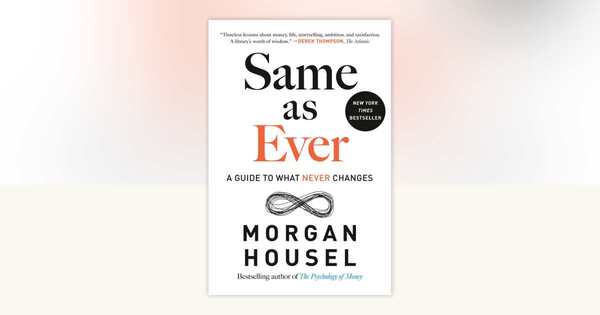
Same as Ever Review (2026): Morgan Housel on What Never Changes
TL;DR: Same as Ever is Morgan Housel’s argument that the smartest way to prepare for the future is not by pretending you can predict it, but by studying the parts of human behavior that hardly change at all: greed, fear, envy, optimism, incentives, storytelling, and the endless tendency to underestimate risk. It is not a step-by-step investing manual. It is a compact mental-model book about uncertainty, probability, patience, and resilience. If you liked The Psychology of Money, this lands in a similar sweet spot: readable, story-driven, and practical, even when it repeats familiar ideas.
Amazon pick: If you want a readable book on risk, patience, and decision-making under uncertainty, check out Same as Ever by Morgan Housel on Amazon.
What this book is really about
A lot of business and personal-finance books are obsessed with what is next. Housel goes in the opposite direction. His core claim is that we get more useful guidance by asking what stays the same. Technology changes. Markets change. Politics changes. But people still respond to incentives, still chase status, still panic when uncertainty spikes, still get seduced by neat stories, and still underestimate the role of luck and hidden risk.
That framing sounds simple, but it is what makes the book work. Instead of trying to give readers a fragile forecast, Housel builds a shelf of sturdier ideas. The result is a book that feels less like a prediction engine and more like a mental shock absorber. Read it that way and it is genuinely useful.
Who it’s for, and who should skip it
This is for you if:
- you like non-fiction that turns big ideas into clear stories rather than dense academic argument,
- you are interested in investing, decision-making, or behavioral psychology,
- you want timeless principles that travel beyond finance into work, business, and everyday life,
- you appreciated books like The Psychology of Money, Thinking in Bets, or Clear Thinking.
You should probably skip it if:
- you want a tactical money book with asset allocation, debt payoff rules, or portfolio instructions,
- you are allergic to anecdote-heavy writing and prefer hard data on every page,
- you already consume a lot of Housel and Taleb-style thinking and want something radically new.
If you are unsure, the safest Amazon route is the core book search here: search Same as Ever on Amazon.
Key ideas that make the book worth reading
1. The future is unpredictable, but human reactions are more stable. Housel’s best move is shifting attention from specific forecasts to recurring patterns. That is a more humble and often more useful lens. You may not know the next crisis, but you can safely assume that leverage, overconfidence, panic, crowd behavior, and story-driven decision-making will keep showing up.
2. Risk is mostly what you cannot see. This is one of the book’s strongest threads. People are usually good at listing known risks and terrible at respecting unknown ones. Housel keeps pressing the point that resilience matters more than precision, because the blow that hurts most is often the one no spreadsheet modeled well.
3. Compounding applies to more than money. Tiny inputs can create huge outcomes over time, in careers, relationships, business, and history. Housel is especially good at reminding readers that major turning points often begin as small, forgettable events that only look obvious in hindsight.
4. Stories beat statistics in the real world. This is not always fair, but it is usually true. People act on narratives they can remember and retell. That matters if you are selling, leading, writing, investing, or just trying not to be manipulated by a clean story that outruns the evidence.
5. Expectations quietly control satisfaction. One of Housel’s recurring strengths is showing how outcomes and emotions are often separated by expectations. Two people can get the same result and experience it very differently depending on what they thought they deserved.
6. Calm endurance is underrated. Many of the book’s lessons point toward room for error, patience, optionality, and emotional steadiness. That may sound unsexy, but it is probably why Housel’s work lands with so many readers. He makes prudence feel intelligent rather than timid.
What it gets right
The biggest win is tone. Housel writes clearly, avoids jargon, and knows how to make abstract ideas stick. This book is easy to recommend because it is readable by almost anyone curious about decision-making, not just finance people.
It also gets the level right. Instead of pretending to be a complete theory of everything, it offers a set of durable lenses. That makes it strong as a re-read. A year from now, you may not remember every example, but you will likely remember the point about hidden risk, moving goalposts, incentives, or the power of stories.
Another strength is portability. The examples lean financial and historical, but the lessons transfer well. Managers can use them. Founders can use them. Anyone making long-horizon decisions can use them. Even simple life planning gets better when you assume surprises are normal and margin matters.
What it gets wrong, or at least overdoes
The downside of Housel’s style is that his books can feel more like polished essays than a cumulative argument. If you want a tightly structured framework that builds chapter by chapter, this can feel loose.
There is also some idea overlap with his earlier work and with the wider behavioral-finance shelf. That is not fatal, because the writing is good, but it does mean experienced readers may occasionally think, “Yes, I know, incentives matter and forecasting is fragile.”
Some readers will also want more evidence and fewer illustrations. Housel tends to persuade through memorable stories and broad historical references rather than exhaustive data. That makes the book accessible, but it also leaves room for skeptics to wish for more rigorous proof on the margins.
Practical takeaways
- Build margin into plans. Save a little more, borrow a little less, and leave yourself more time than you think you need.
- Prepare for surprise instead of predicting specifics. A flexible plan usually survives longer than a clever forecast.
- Audit your incentives. Ask what you believe because it is true, versus what you believe because it rewards you socially or financially.
- Respect the power of stories. Use them carefully in your own work, and do not confuse a persuasive narrative with a correct one.
- Watch your expectations. Upgrading standards forever is a reliable way to feel perpetually behind.
- Favor patience and staying power. In markets and in life, survival keeps options open.
If you want to compare editions, related titles, or current pricing, this broader Amazon search is useful too: browse Morgan Housel books on Amazon.
How it compares with similar books
If The Psychology of Money is Housel’s most popular book, Same as Ever is arguably the more general one. It is less about personal finance behavior specifically and more about enduring patterns in a chaotic world. That broader framing makes it useful well beyond money.
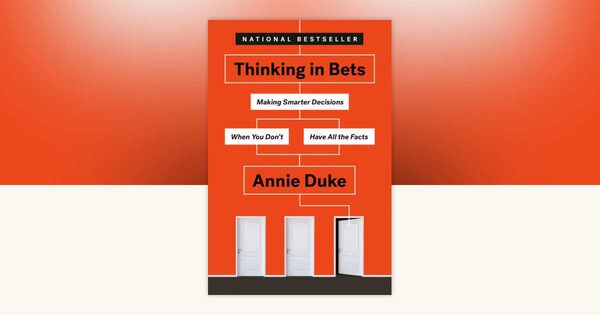
Compared with Annie Duke’s Thinking in Bets, Housel is less tactical about decision quality and probability, but easier to hand to a general reader. Compared with Nassim Taleb, he is far less combative and much more accessible, though also less theoretically sharp. Compared with Shane Parrish’s Clear Thinking, Housel is looser and more essayistic, but warmer and more quotable.
That combination is probably the right way to position it: not the deepest book on uncertainty, but one of the most giftable and readable.
Final verdict
Same as Ever succeeds because it does not promise magic. It offers a more grounded bargain: stop hunting for certainty, study what people always do, and build a life that can handle shocks. That is not flashy advice, but it ages well.
My take is that this is a very good book for thoughtful general readers, especially anyone tired of trend-chasing and prediction theatre. It is strongest as a perspective reset. If you want a book that helps you think more calmly about risk, expectations, luck, and long-term decision-making, this is an easy recommendation. If you want tactical formulas, you may admire it more than use it.
Rating: 8.6/10 for clarity, usefulness, and re-read value.
Want the quickest purchase path? Use this Amazon search link: find Same as Ever on Amazon.
Similar books
- The Psychology of Money by Morgan Housel
- Thinking in Bets by Annie Duke
- Clear Thinking by Shane Parrish
- Fooled by Randomness by Nassim Nicholas Taleb
- Four Thousand Weeks by Oliver Burkeman
Sources
- Penguin Random House book page for Same as Ever: publisher overview
- Amazon AU listing/search results for title and edition verification: Amazon search
- Shortform overview of the book’s core themes: Shortform summary
- Christian B. B. Houmann notes and summary: book notes
FTC disclosure: This post contains affiliate links. If you buy through these links, Must Grab That may earn a commission at no extra cost to you.