Abundance Review (2026): Ezra Klein and Derek Thompson’s Build-More Manifesto Is Timely—and Imperfect
Disclosure: As an Amazon Associate, MustGrabThat may earn from qualifying purchases. This review uses publicly available publisher/metadata information, reader-focused analysis, and editorial judgment to help you decide whether the book fits your shelf.
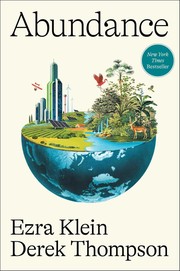
Quick take: Abundance by Ezra Klein and Derek Thompson is one of the rare public-policy books that reads less like homework and more like a practical operating-system update. Its central argument is simple: many of America’s biggest problems are no longer caused only by bad intentions or lack of concern, but by a built environment, permitting culture, and institutional reflex that make it too hard to create enough housing, energy, infrastructure, medical capacity, and technological progress. That makes it especially timely for 2026, when housing costs, energy build-out, AI infrastructure, and institutional trust are still everyday topics rather than abstract policy debates.
Want the exact book? Check Abundance by Ezra Klein and Derek Thompson on Amazon before you buy so you can compare hardcover, Kindle, and audiobook pricing.
Why Abundance is a timely MustGrabThat book pick
MustGrabThat’s Books section tends to favor practical, high-signal nonfiction: decision-making, money, productivity, health, and big ideas that help ordinary readers make better choices. That is why Abundance fits. Open Library lists the book as a 2025 release by Ezra Klein and Derek Thompson, with Simon & Schuster as publisher, 304 pages, and ISBN 9781668023488. Those details matter because this is not an obscure pamphlet or niche academic monograph; it is a major-market argument from two writers with large audiences and a topic that keeps showing up in mainstream conversations about housing, infrastructure, climate, economic growth, and government capacity.
The phrase “abundance agenda” has also become a useful shorthand in politics and policy circles. Whether readers agree with Klein and Thompson or not, the book gives a name to a frustration many people already feel: everything important seems to take too long, cost too much, and require too many procedural battles before anything tangible gets built. If you have ever wondered why cities cannot approve enough homes, why clean energy projects get stuck, or why public ambition often dissolves into process, this book gives you a framework for the problem.
That makes Abundance a different kind of “must grab” recommendation. It is not a tiny habit manual like Tiny Experiments, and it is not a personal decision-making guide like Clear Thinking. It is a lens for understanding why so many useful things feel artificially scarce. For readers who want to understand the argument everyone will keep referencing, it is worth considering.
What the book covers
The core claim of Abundance is that the United States has become better at identifying harms than at building solutions. Rules designed to prevent damage, protect communities, slow bad projects, or force public review can also make good projects nearly impossible. Housing is the most obvious example: when desirable places block apartments, duplexes, transit-oriented development, and denser neighborhoods, the result is not preservation for everyone. It is scarcity, rising rents, longer commutes, and a sorting machine that reserves opportunity for people who can already afford it.
Klein and Thompson broaden that idea beyond housing. The same basic pattern appears in clean energy, transportation, healthcare, science, and public works. A society can say it wants decarbonization while failing to permit the transmission lines required to move clean power. It can celebrate innovation while making it hard to build labs, factories, and infrastructure at speed. It can spend enormous sums yet produce too little visible improvement because institutions are optimized for veto points, litigation, compliance, and stakeholder management rather than timely delivery.
The book’s implied target is not just “big government” or “the market.” It is a culture of organized obstruction that can appear on the left, right, and center. Conservatives may resist public investment even when markets need coordination. Liberals may support public goals while defending procedural systems that prevent those goals from happening. Local homeowners may use progressive language to oppose new housing. Environmental rules may delay energy projects that would reduce emissions. In other words, Abundance is less interested in easy villains than in broken feedback loops.
The best reason to read it: it connects policy to everyday pain
The strongest part of Abundance is that its abstract policy argument maps onto problems readers actually feel. Housing scarcity is not just a zoning debate; it is the reason a young family cannot stay near grandparents, a teacher cannot live near the school where they work, or a worker spends hours commuting from the only place they can afford. Energy scarcity is not just a grid-planning issue; it affects utility bills, climate resilience, data-center growth, and whether electric vehicles and heat pumps can scale without stressing the system. Institutional sclerosis is not just a think-tank phrase; it is the experience of watching a project get announced, studied, challenged, re-studied, and delayed until public trust evaporates.
That translation is valuable. Many policy books assume the reader already cares about process. Abundance works because it explains why process becomes destiny. If a society makes building legal only after years of delay, only the richest developers, most politically connected institutions, or most patient actors can participate. If a city says it supports affordability but prohibits most new homes in high-opportunity neighborhoods, then scarcity is not an accident. It is the predictable result of the rules.
This is also where the book pairs well with MustGrabThat favorites like The Psychology of Money or Same as Ever. Those books help readers notice incentives and behavior at the personal level. Abundance applies a similar incentive-aware mindset to institutions: what do we reward, what do we block, and what outcomes should we expect if everyone behaves rationally inside a bad system?
Strengths
1. The framing is sticky
Good nonfiction gives readers a phrase they can use later. “Abundance” is that phrase. It reframes several arguments that usually happen separately—housing, energy, transit, healthcare, science, infrastructure—as versions of the same question: are we willing and able to produce enough of the things we claim to value? That gives the book practical staying power even for readers who do not agree with every policy prescription.
2. It resists one-team thinking
The book is likely to annoy readers who want every problem blamed on one political tribe. That is a strength. Klein and Thompson push liberals to admit that government can fail and that process can become an anti-progress machine. They push conservatives to admit that public capacity and state action are sometimes necessary to build markets, infrastructure, and prosperity. The result is not perfectly neutral, but it is more intellectually useful than a simple partisan victory lap.
3. It makes “building” feel like a moral issue
The moral force of the book comes from its insistence that scarcity is not neutral. When housing is scarce, people are displaced. When clean energy is delayed, emissions continue. When medical or scientific capacity is constrained, lives can be affected. When infrastructure takes decades, citizens reasonably stop believing institutions can solve problems. Abundance argues that caring about outcomes requires caring about delivery, not just intentions.
Weaknesses and caveats
The main caveat is that a big framework can smooth over local complexity. Communities do not oppose projects only because they are selfish or allergic to growth. Some have experienced real displacement, pollution, corruption, or broken promises. A pro-building agenda that ignores trust, distribution, and enforcement can become a gift to the most powerful builders rather than a win for ordinary people. Readers should keep that tension in mind.
Another caveat: Abundance is more persuasive as diagnosis than as a complete implementation manual. The book can make the “we need to build” case feel obvious, but the hard part is deciding which rules to remove, which to rewrite, which protections to preserve, and who bears risk when speed increases. Permitting reform sounds clean in the abstract. In practice, details decide whether reform produces more homes, cleaner energy, and better infrastructure—or merely faster mistakes.
Finally, readers looking for a personal productivity book may find the scale too macro. This is not a checklist for your morning routine. It is a book about systems, institutions, political economy, and the relationship between values and capacity. If your reading stack is mostly habit books, expect a broader public-issues argument rather than a page-by-page self-improvement plan.
Who Abundance is for
- Readers who care about housing affordability. If zoning, NIMBY politics, rent pressure, and city growth are already on your radar, this is directly relevant.
- Climate and energy readers. The book is useful for people who understand that climate goals require physical infrastructure, not just aspiration.
- Founders, operators, and builders. If you are interested in why institutions slow down, the book gives language for capacity, delivery, and constraints.
- Politically curious readers tired of slogans. The argument cuts across familiar teams and asks what actually gets produced.
- Book-club groups that like debate. This is a strong discussion pick because smart readers can agree on the problem while disagreeing sharply about solutions.
Who should skip it
- Readers who want purely personal advice. Try a more individual-focused book from the MustGrabThat Books archive if you want habits, money, or productivity tactics.
- Readers who dislike policy arguments. Even when the writing is accessible, the subject is still institutions, regulation, and public capacity.
- Readers who want a single-villain explanation. The book’s point is that scarcity is often produced by overlapping incentives, not one cartoon bad guy.
- Readers looking for a technical blueprint. This is a broad argument, not a city-by-city permitting manual.
Buying formats: hardcover, Kindle, or audiobook?
The hardcover is the best choice if you like underlining arguments and returning to specific chapters. Abundance is the kind of book where the vocabulary matters; keeping a physical copy makes it easier to revisit the housing, energy, and institutional-capacity sections later. Kindle is the practical pick if you mostly read while traveling or want searchable highlights. The audiobook may be the easiest format if you already consume policy podcasts and want the argument while commuting, walking, or doing chores.
Because prices move, it is worth checking all formats before buying: view Abundance on Amazon. If you are buying for a discussion group, the hardcover or Kindle version will probably be easier to reference than audio alone.
Final verdict
Abundance is worth reading if you want a clearer explanation for why wealthy societies can feel strangely incapable of building enough of what they need. Its biggest value is not that every proposed fix will convince every reader. Its value is that it changes the question from “do we care?” to “can our institutions actually deliver?” That shift is useful.
For MustGrabThat readers, the recommendation is straightforward: grab it if you like accessible big-idea nonfiction with real-world stakes. Skip it if you want a tactical self-help book or if policy debates make your eyes glaze over. For everyone in the middle, Abundance is a timely, conversation-shaping read that will help you understand a growing argument about housing, energy, infrastructure, and progress in 2026.
MustGrabThat rating: Recommended for curious nonfiction readers, policy-watchers, and anyone trying to understand why “build more” has become one of the defining arguments of the moment.