Whistler Review (2026): Ann Patchett’s Quiet Family Drama Is a Smart Book-Club Pick
FTC disclosure: This review contains an Amazon affiliate link. If you buy through that link, MustGrabThat may earn a small commission at no extra cost to you.
Quick take: Ann Patchett’s Whistler is the kind of literary novel that rewards readers who like emotionally precise family stories more than twist-heavy plots. It is timely, too: Publishers Weekly lists it among the current hardcover fiction bestsellers for the July 13, 2026 list, with five weeks on the list, and PW’s pre-publication review called it a “quietly profound family drama.”
Buy it on Amazon: Check Whistler by Ann Patchett on Amazon.
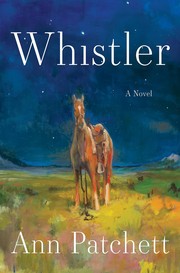
Cover credit: Book cover image © publisher/rights holder. Used for review/identification. Source: Open Library cover service for ISBN 978-0-06-351163-7.
Why Whistler is worth reviewing now
Some books arrive with fireworks; Ann Patchett novels tend to arrive with a quieter kind of attention. Whistler has the advantage of both: it is a new June 2026 Harper hardcover from one of America’s most reliable literary novelists, and it is already showing meaningful bestseller momentum. Publishers Weekly’s hardcover fiction bestseller list for July 13, 2026 ranks Whistler at number three, after five weeks on the list. That makes it timely enough for shoppers who want to know what people are actually buying right now, while Patchett’s long track record makes it less likely to be a forgettable spike.
For MustGrabThat readers, the appeal is straightforward: this is not a gadget, a kitchen shortcut, or a productivity system, but it is still a practical buying decision. Hardcovers are expensive enough that you want a clear answer before you click. Is this a book-club pick? A gift for a Patchett fan? A beach-bag novel? A slow literary character study? The answer is: mostly yes to the first two, maybe to the third, and definitely to the fourth.
If you follow our Books coverage, you know we try to separate “popular” from “useful to the reader.” Whistler earns attention because the premise is intimate, the author is proven, and the early signals suggest a book that readers will be discussing rather than merely purchasing.
What the book covers
Whistler centers on Daphne, a 53-year-old English teacher whose settled life is interrupted by a chance encounter at the Metropolitan Museum of Art in New York. She is there with her husband, Jonathan, when she sees Eddie, her former stepfather, after many years apart. That reunion pulls her back toward old family history, unresolved grief, the strange afterlife of divorce, and the question of what people owe to the people who once helped raise them.
That is classic Patchett territory: family bonds that are not clean, choices that echo for decades, and characters who are decent enough to be sympathetic but complicated enough to feel real. The novel appears to be less interested in a high-concept hook than in how memory changes when the person who shares it reenters the room. Daphne is middle-aged rather than young, married rather than searching for a conventional romance, and reflective rather than impulsive. That alone gives the book a welcome texture in a market crowded with louder premises.
Readers coming from Tom Lake, The Dutch House, or Commonwealth will recognize the author’s favored questions: How do families become families? What survives estrangement? When does forgiveness clarify the past, and when does it simply make the present easier to inhabit? Whistler seems designed for readers who enjoy those questions more than neatly engineered suspense.
Who should buy Whistler
Buy this if you like literary family drama. Patchett is very good at finding emotional stakes in ordinary rooms: a house, a museum, a classroom, a conversation that starts politely and suddenly exposes a fault line. If you like novels where the main event is a character understanding her life differently, this is likely in your lane.
Buy this for a book club that actually wants to talk. The premise offers several easy discussion doors: blended families, former stepparents, loyalty to the living versus loyalty to memory, and the way adulthood changes childhood narratives. Those are more durable book-club questions than “what happened next?”
Buy this for Patchett completists. Some authors have “wait for paperback” status; Patchett has become a hardcover author for many readers because the books are polished, giftable, and likely to stay on the shelf. If Tom Lake worked for you, Whistler is a sensible next pickup.
Buy this as a thoughtful gift. It is a safer literary gift than many trendier novels because it has broad adult appeal without relying on shock, explicit genre expectations, or internet-specific buzz. It is especially easy to recommend for readers who enjoy Elizabeth Strout, Barbara Kingsolver’s quieter passages, or character-forward domestic fiction.
Who should skip it
Skip it if you need a plot engine on every page. The available description and Patchett’s recent work point toward reflection, conversation, and emotional accumulation, not thriller pacing. If your favorite novels are built around cliffhangers, reversals, and short chapters that end with a gasp, this may feel too quiet.
Skip it if you dislike family retrospection. Whistler appears to draw much of its power from looking backward. That is the point, but it will not satisfy readers who prefer novels focused on external adventure or contemporary social satire.
Skip the hardcover if price is the deciding factor. At a $30 list price, this is not an impulse paperback. If you are unsure about Patchett, borrow it from a library, sample the ebook, or wait for a sale. If you already know you like her, the hardcover is easier to justify.
Strengths
1. Patchett’s emotional control. Patchett’s best fiction rarely begs the reader to feel something. It sets up a situation, lets the characters behave with recognizable restraint, and trusts the implications to gather. That is a major strength for a story about reunion and family memory. A less disciplined version of this premise could become sentimental very quickly; Patchett’s reputation suggests a steadier hand.
2. A protagonist at a genuinely interesting life stage. Daphne being 53 matters. This is not another coming-of-age story dressed up as adult fiction. Middle age brings different stakes: a longer memory, fewer illusions about reinvention, and a sharper understanding of what cannot be repaired. That perspective should make Whistler especially appealing to readers who want adult characters with adult emotional math.
3. Giftability and book-club usefulness. Some books are strong but hard to recommend broadly. Whistler looks like the opposite: serious enough to feel worthwhile, accessible enough for mainstream readers, and attached to an author many casual readers already recognize. That combination is why it makes sense as a “must grab” book rather than just a literary-news item.
4. A compact page count. Publishers Weekly lists the Harper edition at 304 pages. That is long enough for depth but short enough not to become a reading project. In a summer full of oversized hardcovers, a focused literary novel can be a relief.
Weaknesses and caveats
The quietness is a feature, not a bug—but it may still be a problem for some readers. Patchett’s fiction often depends on subtle shifts in loyalty, perception, and memory. If you read mainly for plot velocity, the experience may feel underpowered. That does not make it bad; it means the book is aiming at a different pleasure.
Expect emotional realism, not escapist fantasy. The premise has a museum encounter, a long absence, and the reappearance of a former parental figure. Those ingredients can be cozy in the hands of a gentler writer, but Patchett tends to notice the cost of people’s choices. This may be a beautiful read without being a breezy one.
Hardcover value depends on your relationship with the author. If you loved Atmosphere by Taylor Jenkins Reid for its sweep and emotional accessibility, Whistler may scratch a related but quieter itch. If you want maximum pages-per-dollar or a more genre-forward story, the hardcover may be less urgent.
Best format to buy
Hardcover: Best for gifts, Patchett fans, and readers who like keeping literary fiction on the shelf. The cover is clean and recognizable, and the book’s bestseller status makes it feel current without being a risky unknown.
Ebook: Best if you want immediate access or expect to read in small sessions. Patchett’s prose usually works well digitally because the books are not dependent on illustrations, charts, or reference formatting.
Audiobook: Potentially excellent, depending on narrator preference. Character-driven literary fiction often benefits from a measured audio performance, but sample first if possible; a too-slow narration can exaggerate the quietness.
Library first: Smart for readers new to Patchett. If you are unsure whether her reflective style works for you, borrowing first is reasonable. If you finish it and want to own it, then the hardcover becomes a better buy.
How it compares to recent MustGrabThat book picks
Compared with recent practical nonfiction like The Next Conversation, Whistler is not trying to give you a toolkit. Its usefulness is different: it gives readers a thoughtful, emotionally intelligent story to sit with. Compared with more premise-forward fiction, it is likely less dramatic but more finely observed.
That distinction matters because “best book to buy” does not always mean “most exciting premise.” Sometimes it means a book you will actually finish, discuss, lend, or remember. Whistler has that profile.
Final verdict: should you grab it?
Yes, if you are a Patchett reader, a book-club shopper, or someone who likes elegant family fiction with adult emotional stakes. Whistler is not the flashiest trending hardcover, but it may be one of the safer literary buys of the season: a new novel from a proven author, strong bestseller momentum, manageable length, and a premise built for discussion.
Wait or borrow it if you need a fast plot, are allergic to family-memory novels, or are only casually curious at hardcover pricing. But if your shelf already has Tom Lake, The Dutch House, or Commonwealth, Whistler belongs on the shortlist.
Bottom line: Whistler looks like a timely, high-confidence literary-fiction pickup: quiet rather than explosive, thoughtful rather than gimmicky, and especially well suited for readers who want their summer fiction to leave a little echo after the last page.