Atmosphere Review (2026): Taylor Jenkins Reid’s Space-Age Love Story Still Has Gravity
MustGrabThat may earn a commission from qualifying purchases made through links in this article. As an Amazon Associate, we earn from qualifying purchases.
Quick verdict: Atmosphere is Taylor Jenkins Reid in full crowd-pleasing mode: a polished, emotionally direct novel about ambition, chosen family, forbidden love, and the cost of wanting a life bigger than the one handed to you. If you liked the immersive-but-accessible sweep of Daisy Jones & The Six or The Seven Husbands of Evelyn Hugo, this is an easy summer-to-fall book club pick.
Check current price and formats: See Atmosphere by Taylor Jenkins Reid on Amazon.
Why this book is worth paying attention to in 2026
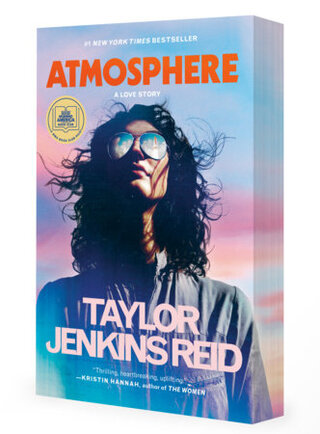
Taylor Jenkins Reid’s Atmosphere is not a quiet release that needs a lot of explanation. Penguin Random House lists it as Atmosphere: A GMA Book Club Pick, and Goodreads’ June 2026 “most popular by release date” page still shows the book generating unusually strong reader activity, with hundreds of thousands of shelf adds and a high average rating. In other words, this is exactly the kind of mainstream fiction title people keep seeing in book club roundups, airport displays, library holds lists, and “what should I read next?” conversations.
That popularity matters because Atmosphere is the type of novel many shoppers buy without wanting a dense literary homework assignment. They want a book that feels substantial enough to discuss, fast enough to finish, and emotional enough to remember. Reid has built a reputation on that balance. She takes a glamorous or high-pressure world—rock bands, old Hollywood, elite sports, now the space program—and uses it as a stage for intimate decisions about identity, love, compromise, and public image.
MustGrabThat’s book coverage usually leans practical: is this worth your money, your time, and a place on the nightstand? For more nonfiction-leaning picks, see our Books archive, including reviews like Build the Life You Want and The Creative Act. Atmosphere earns a slightly different recommendation: it is a strong gift/book-club/vacation read for people who want a big-feeling novel without sacrificing readability.
What Atmosphere is about
Atmosphere follows Joan Goodwin, a reserved professor of physics and astronomy whose fascination with the sky becomes something more concrete when she is accepted into NASA’s astronaut training program in the early 1980s. The historical frame is important: the space shuttle era is full of optimism, danger, bureaucracy, macho tradition, and media spectacle. Women are being invited into rooms that were not built with them in mind, and Reid uses that tension to give Joan’s professional ascent real stakes.
The novel is marketed as a love story, but it is not only about romance. It is about vocation, secrecy, friendship, grief, and the strange isolation that can come with getting exactly what you thought you wanted. Joan is not written as a swaggering hero. Her appeal is quieter. She is observant, intellectually serious, emotionally cautious, and often more comfortable with equations than confessions. That makes the astronaut setting work: the book is interested in both outer space and the inner pressure chamber of a person trying to become herself.
Reid also understands that a popular novel needs momentum. Training sequences, NASA culture, public expectations, family dynamics, and romantic secrecy all create forward motion. The result is not hard science fiction, and readers should not expect a technical manual about orbital mechanics. The space program is the arena; the emotional decisions are the engine.
What works best
1. Reid makes a huge setting feel personal
NASA could easily overwhelm a character-driven novel. Reid avoids that by keeping the focus on Joan’s point of view: what it feels like to be tested, watched, underestimated, celebrated, and misunderstood. The book’s best moments are not necessarily the grandest ones. They are often the scenes where Joan has to translate an enormous public dream into private choices: how much to reveal, whom to trust, what kind of life she is allowed to want.
2. It is accessible without feeling empty
There is a reason Reid’s books travel so well through recommendation chains. Her prose is clean, her chapters move, and her themes are easy to talk about without being simplistic. Atmosphere gives readers plenty to discuss—gender barriers, ambition, family responsibility, queer love, institutional pressure, risk—but it rarely slows down to lecture. That makes it a useful pick for mixed reading groups where some people want emotional drama and others want historical texture.
3. The emotional arc has real pull
The strongest reason to pick up Atmosphere is not simply that it is trending. It is that Reid knows how to structure yearning. Joan’s professional dream and romantic life are both shaped by constraint: official rules, social norms, family expectations, and the constant awareness that visibility can be dangerous. That gives the love story a sense of pressure that fits the title beautifully. The book is about atmosphere in several senses: the air around a body, the mood of a room, and the conditions required for a life to become possible.
Weaknesses and caveats
Atmosphere is polished commercial fiction, and that is both its strength and its limitation. Readers who want experimental structure, thorny ambiguity, or a deeply technical space-program novel may find it too smooth. Reid is more interested in emotional clarity than in making the reader work through deliberately difficult prose. For many people that will be a feature; for some literary-fiction purists, it may feel too engineered.
The NASA backdrop may also disappoint readers hoping for exhaustive historical depth. The book uses the period and workplace convincingly enough for mainstream fiction, but the selling point is character drama, not documentary-level detail. If you are buying this for someone obsessed with mission procedures, spacecraft design, or the politics of every shuttle-era decision, pair it with a nonfiction space book instead of expecting Atmosphere to do that job alone.
Finally, Reid’s emotional directness can be divisive. She tends to make the core feelings legible. That makes the book satisfying and widely recommendable, but it also means readers who prefer icy restraint or unresolved moral messiness may not connect with it as strongly as the Goodreads rating suggests.
Who should buy Atmosphere?
- Book club readers who want an accessible novel with enough themes for discussion.
- Taylor Jenkins Reid fans who like her mix of big setting, emotional stakes, and highly readable pacing.
- Historical fiction readers interested in women entering elite, male-dominated spaces.
- Romance-adjacent fiction readers who want love to matter, but do not need a formula romance structure.
- Gift buyers looking for a current, recognizable hardcover or paperback that feels safer than a niche literary gamble.
Who should skip it?
- Skip it if you want hard science fiction or a technical astronaut memoir.
- Skip it if you dislike emotionally explicit mainstream fiction.
- Skip it if you mainly read thrillers and need constant plot twists rather than character-driven momentum.
- Skip it if you are tired of prestige historical settings being used primarily as backdrops for love stories.
Buying formats: hardcover, paperback, Kindle, and audio
For a book like this, format depends on how you read. The hardcover makes sense as a gift or book club pick, especially because Reid’s name recognition gives it “nice present” energy. Kindle is the practical choice if you want it immediately or plan to read while traveling. Audiobook is also worth considering if you usually finish character-driven novels faster by listening during walks, commutes, or chores.
If price matters, compare formats before buying. Popular book-club titles often see shifting discounts, and a paperback or Kindle edition may be the smarter buy if you do not care about collecting the physical copy. The Amazon listing linked above is the easiest place to check current availability and pricing across formats.
Final verdict
Atmosphere is easy to recommend because it knows exactly what it is: a big-hearted, highly readable Taylor Jenkins Reid novel with a compelling historical frame and a love story built around pressure, privacy, and ambition. It is not the most technically detailed space novel you can buy, and it is not trying to be. It is a mainstream literary-commercial crossover designed to keep pages turning while giving readers something emotional to carry away.
For most readers, that is enough. If you want a current, conversation-ready novel for a vacation bag, nightstand, or book club calendar, Atmosphere is a strong pick. If you want a specialized NASA history, look elsewhere. But if the idea of Taylor Jenkins Reid writing about astronauts, ambition, and complicated love sounds appealing, this is very likely worth grabbing.
Buy it here: Atmosphere by Taylor Jenkins Reid on Amazon.