The Courage to Be Disliked Review (2026): Adlerian Psychology, Approval, and the Cost of Freedom
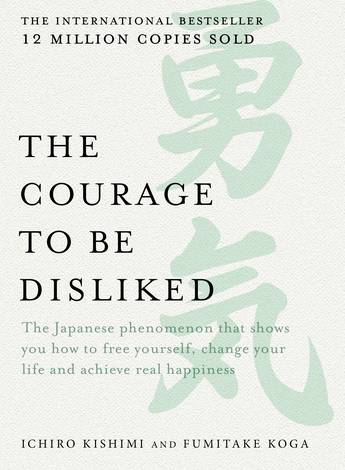
The Courage to Be Disliked by Ichiro Kishimi and Fumitake Koga is one of those self-help books that lands differently depending on what you want from the genre. If you want warm encouragement, step-by-step habit templates, and lots of modern case studies, this is not that book. If you want a sharp philosophical challenge to your assumptions about trauma, approval, freedom, and happiness, it is unusually memorable.
Quick take: this is a readable introduction to Adlerian psychology wrapped in a staged dialogue between a philosopher and a skeptical young man. At its best, it jolts you out of passive thinking and pushes you toward responsibility, contribution, and self-authorship. At its worst, it can sound too absolute, too neat about suffering, and too willing to flatten complex psychological realities into clean philosophical slogans.
Buy or preview on Amazon
If you want to check editions, price, Kindle availability, or audiobook options, start here: See The Courage to Be Disliked on Amazon.
TL;DR
Read it if you want a compact, provocative book about freedom, interpersonal friction, and the idea that much of misery comes from the goals we set, the stories we tell ourselves, and the way we chase approval. Skip it if you need nuance around trauma, mental illness, or evidence-heavy psychology. This is a philosophy-forward book disguised as self-help, and that is both its power and its weakness.
Who it’s for / Who should skip
This book is for:
- Readers burned out on generic productivity advice who want a more foundational look at why they behave the way they do.
- People stuck in approval-seeking, comparison, resentment, or people-pleasing loops.
- Anyone curious about Adlerian psychology but not looking for a textbook.
- Readers who enjoy dialogue-driven books that argue with them instead of soothing them.
You should probably skip it if:
- You want a practical workbook with checklists and weekly exercises.
- You are specifically looking for modern clinical psychology or neuroscience.
- You dislike books that make bold claims in a confident, almost confrontational tone.
- You want trauma handled with more care and less philosophical compression.
What the book is about
The structure is simple and effective. A frustrated young man argues with a philosopher over several nights. The philosopher introduces Adler’s core ideas: people are not merely determined by the past, behavior is often goal-directed, interpersonal problems sit at the center of many forms of unhappiness, and freedom requires accepting that other people may dislike you. The dialogue format keeps abstract ideas moving. It also lets the book stage the exact objections many readers will have, which is part of why it remains so discussable.
The central claim is not that the past does not matter. It is that we often use the past as an explanation that quietly becomes an excuse. The book pushes readers to ask a harder question: what purpose does a current behavior or belief serve now? That shift from cause to purpose is the engine of the whole argument. Whether or not you fully buy it, it is a powerful lens.
Key ideas
- Teleology over simple determinism: the book argues that behavior is often oriented toward present goals, not just caused by past events.
- All problems are interpersonal problems: an intentionally bold Adlerian framing that highlights status anxiety, comparison, shame, and approval-seeking.
- Separation of tasks: one of the book’s most useful ideas. You should distinguish what is your task from what belongs to someone else, then stop trying to control the parts that are not yours.
- The courage to be disliked: maturity requires acting according to principle, not arranging your whole life around universal approval.
- Contribution over superiority: happiness is linked less to winning status games and more to feeling useful and connected.
- Freedom has a social cost: if you stop performing for everyone else, some people will resist the new version of you.
What it gets right
The book is excellent at exposing how much everyday misery comes from living inside imagined audiences. If you have ever overexplained a decision, delayed action because someone might judge you, or interpreted every conflict as a verdict on your worth, this book puts a finger directly on the bruise. The idea of separating tasks is especially practical. It helps with work boundaries, family guilt, social friction, and internet-brain overreaction. You cannot fully own another person’s opinion, effort, or emotional response, and trying to do so usually creates more anxiety, not less.
It also deserves credit for being genuinely memorable. Many self-help books are agreeable and instantly forgettable. This one is a little annoying in a way that can be useful. Its strong claims force you to engage. Even when readers disagree, they often remember the argument months later, which says something.
What it gets wrong, or at least oversimplifies
The book’s hardest edge is also its biggest liability. In pushing against victim narratives and passive identity, it sometimes understates the depth of trauma, structural constraints, depression, and other realities that do not evaporate because you adopt a new purpose. Philosophically, that sharpness gives the book force. Practically, it can make some readers feel blamed rather than clarified.
It also occasionally treats difficult human experiences as if they can be solved by adopting the correct frame quickly enough. Real life is messier. Insight helps, but nervous systems, histories, material constraints, and relationships matter too. If you read this as a total explanation of suffering, it becomes brittle. If you read it as a counterweight to helplessness, it becomes much more useful.
Practical takeaways
- When you feel trapped, ask: what is this behavior helping me avoid or achieve right now?
- In conflict, ask: whose task is this? That one question can reduce a surprising amount of emotional noise.
- Stop treating universal approval as a realistic goal. It is not maturity, it is captivity dressed up as niceness.
- Shift from proving your worth to contributing value. That is calmer, more durable, and less exhausting.
- Use the book as a thinking tool, not a complete psychology system. Keep the useful parts and reject the flattening parts.
Similar books
- The Subtle Art of Not Giving a F*ck if you want a more modern, blunt, pop-philosophy version of boundary-setting.
- Man’s Search for Meaning if you want existential psychology with far greater moral weight and lived experience.
- Four Thousand Weeks if you want a gentler but still sharp challenge to control, ego, and unrealistic expectations.
Final verdict
The Courage to Be Disliked is not a perfect self-help book, but it is a distinctive one. It does not hold your hand. It argues. It provokes. It occasionally overreaches. And yet, buried inside that confrontational style are a few ideas that can materially improve a reader’s life, especially the distinction between your task and someone else’s, and the idea that freedom requires tolerating misunderstanding.
My view: this is worth reading not because it is universally right, but because it is usefully destabilizing. It pushes against the lazy belief that our current emotional habits are fixed by history and therefore beyond revision. That push can be liberating. Just do not confuse a strong philosophical frame with the whole truth about human suffering.
Sources
- Allen & Unwin book page
- Simon & Schuster book page
- Goodreads listing and reader response
- Ichiro Kishimi author background
FTC disclosure: This post contains Amazon affiliate links. If you buy through them, Must Grab That may earn a commission at no extra cost to you.