Chef’n FreshForce Citrus Juicer Review (2026): The Small Fresh-Flavor Shortcut That Earns Its Drawer Space
Disclosure: Must Grab That may earn a commission when you buy through our Amazon links. We only recommend products and categories that make sense for the job, and prices/availability can change.
If your kitchen already has knives, cutting boards, and a drawer full of small tools, a citrus press has to earn its space. The appeal of a Chef’n FreshForce-style citrus juicer is simple: it turns lemons and limes into quick juice without dragging out an electric appliance, fishing seeds out of a bowl, or squeezing until your hand hurts.
Quick Amazon check: compare current options for a Chef’n FreshForce citrus juicer, a stainless steel lemon squeezer, or a broader handheld citrus press before you buy.
Chef’n FreshForce Citrus Juicer Review: What It Is
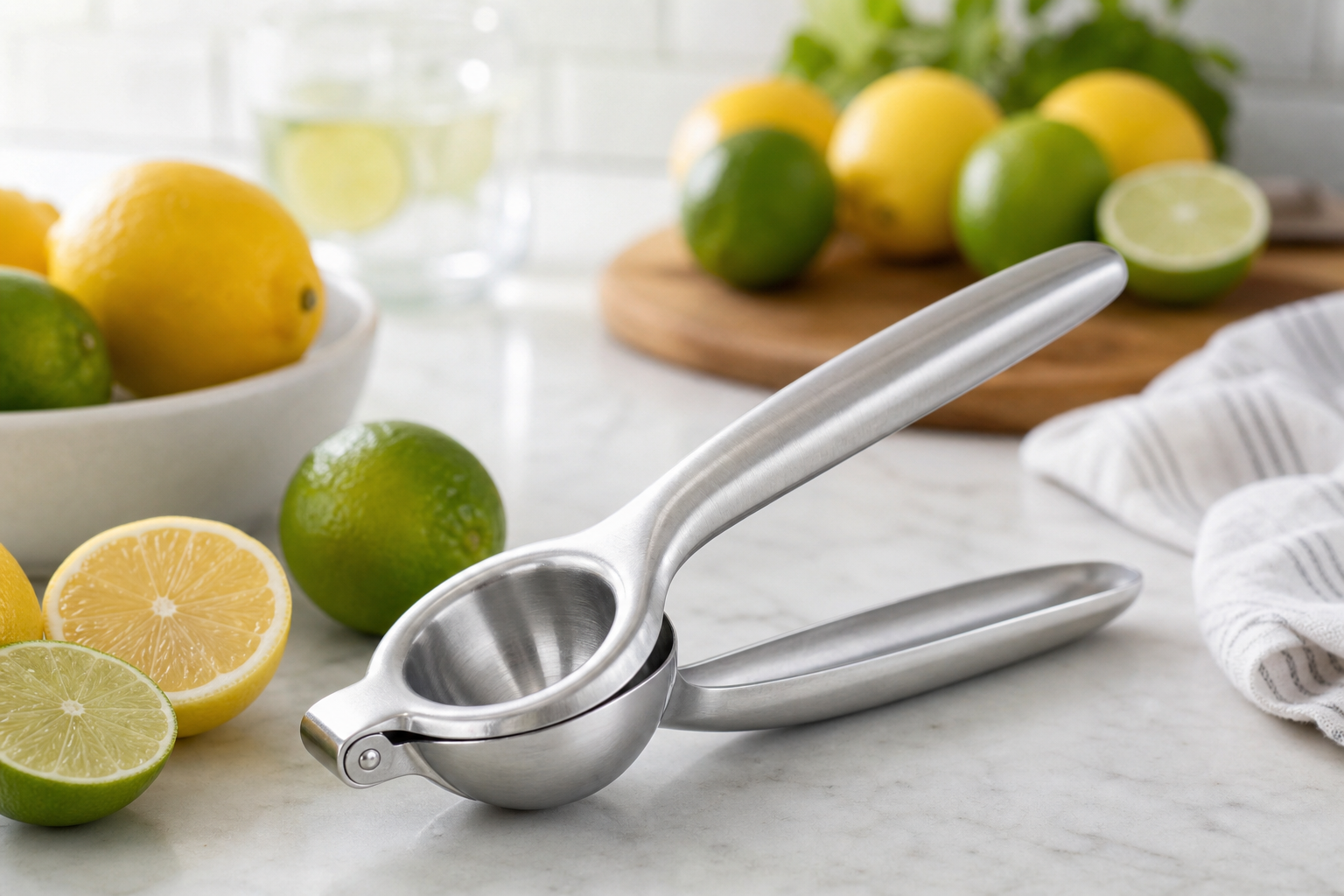
The Chef’n FreshForce citrus juicer is a handheld press made for lemons and limes. Instead of twisting fruit against a reamer, you cut the fruit in half, place it cut-side down, and squeeze the handles together. The tool’s lever action presses the fruit against a perforated bowl, so juice falls through while many seeds and larger bits of pulp stay behind.
That may sound basic, but the design solves a very real kitchen problem: citrus is one of those tiny ingredients that creates outsized friction. A squeeze of lemon can brighten fish, chicken, salad dressings, sheet-pan vegetables, sparkling water, tea, cocktails, marinades, and sauces. A squeeze of lime can rescue tacos, rice bowls, guacamole, beans, soups, and quick weeknight dinners. If the tool makes that squeeze easier, it gets used more often.
This is why a good citrus press belongs in the same practical kitchen-tool conversation as the OXO Good Grips Salad Spinner, the Cuisinart Mini-Prep Plus, and other low-drama prep helpers: it is not flashy, but it removes one annoying step.
Who It Is Best For
A handheld citrus press makes the most sense for people who use lemons or limes a few times a week and want a tool that is faster than a reamer and cleaner than squeezing by hand. It is especially useful if you:
- Cook a lot of weeknight meals that need a quick acidic finish.
- Make salad dressings, marinades, salsas, or guacamole at home.
- Drink lemon water, lime seltzer, tea with lemon, or simple cocktails.
- Get annoyed by seeds slipping into food.
- Have limited counter space and do not want an electric citrus juicer.
- Prefer small, dishwasher-friendly tools that live in a drawer.
It is also a good “make healthy food easier” purchase. When lemon or lime juice is easy, you are more likely to use it instead of reaching for a heavier bottled dressing or a bland shortcut. The tool does not cook for you, but it makes the good finishing touch feel effortless.
Who Should Skip It
Not every kitchen needs a dedicated citrus press. Skip it if you rarely buy fresh lemons or limes, if bottled citrus juice is good enough for your routine, or if you mostly juice oranges or grapefruits. A lemon/lime press is not designed for large citrus, and forcing oversized fruit into a small cup can make the tool messy or uncomfortable.
You may also want to skip a handheld press if you have severe hand-strength issues. Lever designs reduce effort compared with squeezing fruit bare-handed, but you still need grip pressure. In that case, a countertop reamer with a larger handle, an electric juicer, or a press with extra-long handles may be easier to use.
Real-World Use Cases
Weeknight dinners
The most useful moment for a citrus press is the end of cooking. A squeeze of lemon over roasted vegetables, chicken thighs, fish, pasta, or rice can make a basic dinner taste more finished. A lime over tacos or burrito bowls does the same thing. Because the press is quick to rinse, it does not feel like adding another appliance to the cleanup pile.
Salad dressings and marinades
Fresh citrus juice helps simple dressings come together fast: lemon plus olive oil, mustard, salt, pepper, and garlic is enough for a lot of salads. Lime plus oil, honey, chili powder, and salt can work for slaws or grilled chicken. A press makes measuring easier because you can squeeze directly into a small bowl or measuring spoon.
Drinks and entertaining
If you make sparkling water, lemonade, iced tea, mocktails, or cocktails, fresh citrus is one of the easiest upgrades. The tool is small enough to keep near a bar cart or kitchen drawer, and it helps avoid seeds in glasses.
Meal prep
A press is handy when you are prepping several meals at once: squeeze lime over chopped onions for tacos, lemon over cooked grains, or citrus into a yogurt sauce. It will not replace a large juicer, but it keeps small-batch prep moving.
Strengths: Why This Tool Earns Its Drawer Space
It is faster than dragging out an appliance
Small kitchen tools win when the setup and cleanup are almost nothing. A citrus press can be grabbed, used, rinsed, and put away in under a minute. That is exactly the kind of friction reduction that makes a tool worth owning.
It helps control seeds
No handheld press catches every possible seed in every situation, but the perforated bowl usually does a much better job than bare-hand squeezing. That matters when you are finishing food directly over a pan or plate.
It encourages fresh flavor
Fresh lemon and lime juice taste brighter than most bottled versions. If a press helps you use fresh citrus more often, it can improve a surprising range of meals.
It is compact
Compared with a countertop juicer, a handheld press is easy to store. That makes it a better fit for apartments, small kitchens, RVs, and anyone trying to avoid appliance creep.
Caveats to Know Before Buying
The biggest caveat is sizing. Some presses are optimized for limes, some for lemons, and some try to handle both. If you regularly buy large lemons, check the cup size and buyer photos carefully. A too-small press can leave juice behind or make the fruit slip awkwardly.
Material matters too. Heavy metal presses tend to feel sturdier, but they can be heavier in the hand. Painted or coated models may look cheerful, but coatings can chip over time depending on build quality and dishwasher use. Stainless steel models usually look more neutral and may age better cosmetically, though they can cost more.
Finally, remember that a press is not magic. Very dry fruit will not produce much juice, and very thick-skinned citrus may need extra pressure. Rolling the fruit on the counter before cutting can help loosen the juice pockets.
What to Compare on Amazon
Before buying, compare more than the headline photo. Look for:
- Cup size: choose a size that matches the lemons or limes you actually buy.
- Material: stainless steel, aluminum alloy, or coated metal each has tradeoffs.
- Handle comfort: rounded handles are easier to squeeze than sharp edges.
- Dishwasher guidance: check the manufacturer’s cleaning recommendations.
- Hinge design: a sturdy hinge matters because that is where pressure concentrates.
- Storage: make sure it fits your utensil drawer or small-tool bin.
If you are building a low-friction cooking setup, pair a citrus press with other prep tools that remove tiny annoyances, like a good peeler, kitchen shears, or a small food processor. Must Grab That has covered several of these in the Reviews section.
Alternatives Worth Considering
Manual reamer
A wooden or plastic reamer is cheap, durable, and works with different citrus sizes. It can be messier, and it does not catch seeds as neatly, but it is a good minimalist option.
Countertop hand juicer
A tabletop press with a lever is better for larger batches, brunch drinks, or people who want more leverage. It takes more storage space, though, and can be overkill for one lemon.
Electric citrus juicer
An electric juicer makes sense if you juice oranges or grapefruits often. For occasional lemon and lime use, it is usually more cleanup than necessary.
Buying Advice
For most shoppers, the sweet spot is a sturdy metal press with a comfortable handle and a cup size that fits average lemons. If you mainly use limes, a smaller lime press may feel more efficient. If you use both, look for a model marketed for lemons and limes rather than a tiny lime-only tool.
Do not overpay for gimmicks. The best version of this product is simple: strong hinge, comfortable handles, clean holes, and easy cleaning. If a listing focuses more on flashy colors than construction, compare it against a plainer stainless option before deciding.
Final Verdict: A Small Tool That Makes Fresh Citrus Easier
A Chef’n FreshForce-style citrus juicer is not a must-have for every kitchen, but it is a very sensible buy for people who cook with lemon or lime regularly. It earns its space by making a common step faster, cleaner, and more consistent. The right buyer will use it for dinners, dressings, drinks, marinades, and meal prep without thinking much about it.
Best for: home cooks who want fresh citrus without mess or seeds.
Skip if: you rarely use fresh citrus or need to juice large fruit in batches.
Amazon search: compare Chef’n FreshForce citrus juicers and handheld citrus presses.