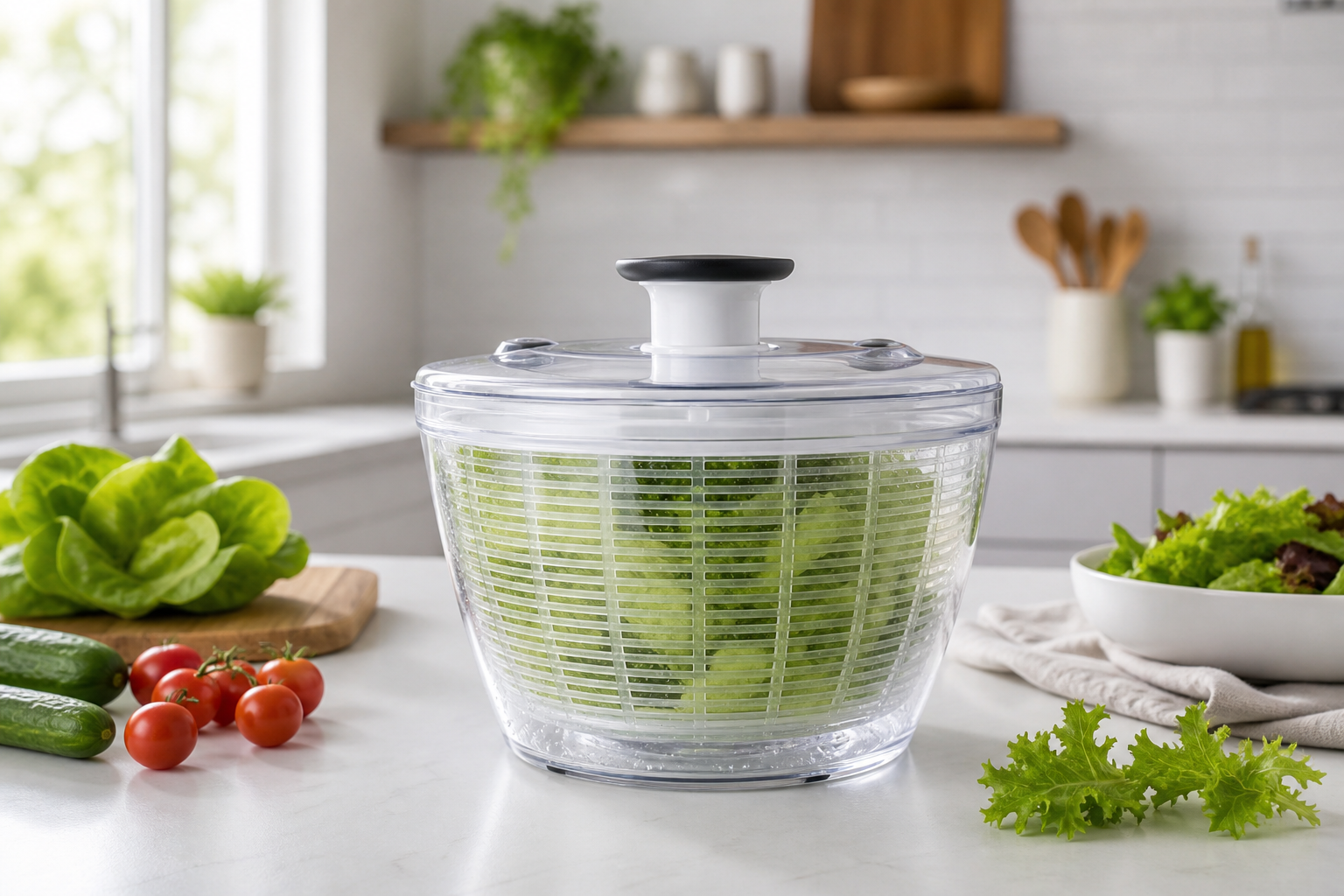
OXO Good Grips Salad Spinner Review (2026): The Low-Drama Kitchen Tool for Better Greens
Disclosure: As an Amazon Associate, Must Grab That may earn from qualifying purchases. This article uses affiliate links, including Amazon links with the tag mustgrabthat-20. We do not claim current price, stock, ratings, or shipping speed; check the retailer page before buying.
If your salads keep turning watery, your herbs go slimy too fast, or washing greens feels like a chore, a good pump-style salad spinner is one of those boring kitchen tools that can quietly earn a permanent cabinet spot.
Quick CTA: Compare the OXO Good Grips Salad Spinner on Amazon, or browse salad spinner alternatives if you want a different size or style.
OXO Good Grips Salad Spinner Review: The Short Version
The OXO Good Grips Salad Spinner is a simple manual kitchen tool designed to wash and dry leafy greens without paper towels, excessive shaking, or a pile of wet dishcloths. You load greens into the inner basket, rinse, place the basket back into the clear bowl, press the top pump, and let centrifugal force fling water away from the leaves.
That sounds almost too basic to review, but the details matter. A salad spinner needs to be stable on the counter, easy to stop, comfortable to pump, simple to clean, and not so huge that it becomes a storage punishment. OXO’s version has remained popular because it gets most of those little things right. It is not a glamorous gadget, and it will not make pre-washed greens magically taste like farmers market lettuce. But for households that buy romaine, spring mix, kale, herbs, spinach, parsley, cilantro, berries, or meal-prep salad ingredients, it can reduce friction every week.
What It Is
The typical OXO Good Grips Salad Spinner setup includes three functional pieces: a clear outer bowl, an inner colander basket, and a lid with a push pump and brake button. The basket can work as a strainer. The bowl can double as a serving or soaking bowl in a pinch. The pump collapses down for lower-profile storage, depending on the version.
The core promise is not “restaurant-quality salad.” It is less water clinging to greens after rinsing. That matters because damp lettuce dilutes dressing, makes wraps soggy, encourages herbs to deteriorate faster in storage, and turns meal-prep containers into little puddles. If you have ever washed cilantro and then watched it collapse into a wet bunch in the fridge, you already understand the appeal.
Who It Is For
This is best for people who buy whole heads of lettuce, fresh herbs, bunches of kale, spinach, arugula, romaine hearts, berries, or farmers market produce. It is especially useful if you cook at home but get annoyed by the “prep tax” of washing vegetables. A spinner turns rinsing greens into a repeatable routine: rinse, spin, drain, repeat if needed, then store or serve.
It also makes sense for meal-prep households. Dry greens hold up better when packed with a paper towel or breathable storage method. You still need sensible storage habits, but starting with less water gives you a better chance of crisp salads later in the week.
If you liked practical kitchen tools we have covered before, such as the KitchenAid All Purpose Kitchen Shears review or the OXO Good Grips Swivel Peeler review, this fits the same lane: not flashy, but useful if it solves a repeat annoyance.
Who Should Skip It
Skip a full-size salad spinner if you almost always buy ready-to-eat greens, rarely cook, or have extremely limited cabinet space. Even a well-designed spinner is still a bulky bowl with a lid. If it ends up buried behind appliances, you will not use it.
You may also want to skip it if your main goal is drying tiny quantities of herbs once a month. A small spinner, a clean towel, or a compact herb keeper may fit better. And if you routinely prep enormous family-size salads, check dimensions carefully; a standard spinner can require batches for big heads of lettuce or large bunches of kale.
Real-World Use Cases
Weeknight Salad Without the Watery Dressing Problem
The most obvious use is washing lettuce and drying it before dressing. Dressing sticks better to drier leaves, and the final bowl tastes less diluted. That alone may justify the tool if you are trying to make at-home salads feel less like an obligation.
Herbs That Do Not Immediately Turn Sad
Cilantro, parsley, dill, mint, and basil can hold a surprising amount of water after rinsing. A gentle spin helps remove surface moisture before chopping or storing. Delicate herbs still need care; do not overload the basket or pump aggressively enough to bruise them.
Kale and Romaine Meal Prep
Kale and romaine are tougher than spring mix, so they handle spinning well. Wash, spin, chop, and store with a towel in a sealed container. This can make lunch assembly easier, especially if your fridge routine already includes small upgrades like drawer liners or containers. For another kitchen organization fix, see our Gorilla Grip drawer and shelf liner review.
Berries and Fragile Produce
Some people use salad spinners for berries, but be careful. Use a gentle rinse and spin, avoid overloading, and know that very soft fruit can bruise. The spinner is better for sturdy greens than for delicate raspberries.
Strengths
- Easy one-handed pump action: The push-top design is simpler for many people than crank-style spinners, especially when your hands are wet.
- Brake button convenience: Being able to stop the spin quickly is more useful than it sounds. It keeps the routine controlled and less splashy.
- Clear bowl: You can see how much water is collecting, then drain and repeat if needed.
- Multi-use pieces: The basket can strain, the bowl can hold washed produce, and the whole setup can become part of meal prep rather than a single-purpose novelty.
- Less paper towel waste: You may still use towels for storage, but you are not relying on a stack of paper towels just to dry greens.
Caveats Before You Buy
The biggest caveat is size. Salad spinners look innocent online and then arrive as a fairly large bowl. Measure your cabinet, sink, and dishwasher space before buying. A large spinner is nicer for romaine and meal prep, but a smaller one may be the better everyday choice for apartments or two-person households.
Cleaning is the second caveat. A spinner handles water by design, but the lid mechanism and basket slats can trap bits of greens if you are careless. Rinse soon after use, check the manufacturer’s care instructions, and let pieces dry before storage so the lid does not become a mystery moisture zone.
Finally, do not expect perfect dryness. A spinner removes a lot of water, not every droplet. For especially crisp storage, spin, drain, and then use a clean towel or salad storage container strategy.
Alternatives and What to Compare
Before buying, compare three things: capacity, lid style, and storage profile. Pump-style spinners are comfortable and fast. Crank-style spinners can be cheaper and simple, but the handle may feel less stable. Collapsible spinners save space, though some feel less sturdy and may not spin as smoothly.
If you are browsing Amazon, look at product dimensions, dishwasher guidance, replacement part availability, and whether the bowl shape fits your cabinets. Also compare generic salad spinners if brand name is less important than price or compactness: compact salad spinners on Amazon.
Buying Advice
Buy the OXO Good Grips Salad Spinner if you want a dependable, easy-to-use version of a tool you expect to use weekly. It is a strong fit if you already buy greens and herbs but procrastinate washing them because the process feels messy.
Choose a smaller or collapsible option if storage is your main concern. Choose a larger spinner if you routinely wash romaine, kale, or bulk salad greens for a family. And if you are only buying it because you saw a pretty kitchen reset video, pause and think about whether you actually eat enough fresh produce to justify the space.
Final Verdict
The OXO Good Grips Salad Spinner is not a must-own for every kitchen, but it is one of the more practical “Amazon essentials” if fresh greens are part of your routine. It solves a real annoyance, improves salad texture, helps herbs and lettuce start storage in better condition, and does not require an app, battery, or learning curve.
The right question is not whether a salad spinner is exciting. It is whether wet produce is causing enough friction that you avoid using the food you already bought. If the answer is yes, this is the kind of low-drama kitchen upgrade that can earn its space.