The Diary of a CEO Review: 33 Laws for Money, Habits, and Consistent Health
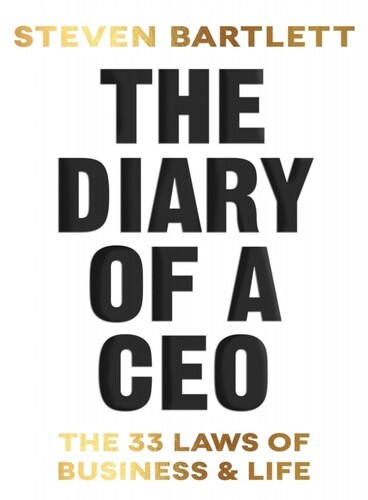
Some books give you tactics. Others give you a way to think. The Diary of a CEO: The 33 Laws of Business and Life by Steven Bartlett (published 2023) sits in the second camp: a punchy set of principles pulled from psychology, behavioral science, and thousands of long-form conversations with high performers.
Even if you never plan to run a company, the “CEO” lens is useful: you’re still the CEO of your calendar, your energy, your habits, and your money. This review focuses on the laws that translate best into daily decisions—especially around work, self-discipline, and the kind of consistency that also improves diet and training.
Curious if this one’s for you?
Check current pricing, formats (Kindle/audiobook/hardcover), and top reviews on Amazon.
What the book is about (in plain English)
Bartlett frames the book as “laws” that help you build a better life by treating your personal growth like a serious operating system. The themes repeat in different forms:
- Protect your attention like it’s money (because it turns into money—and health—over time).
- Design your environment so the right behavior is the default behavior.
- Invest in the skills that compound: communication, relationships, emotional regulation, and consistency.
- Stay honest about trade-offs—every “yes” is a “no” to something else.
It’s structured to be skim-friendly. You can read a “law,” take one action, and be done—then come back later without losing the thread.
Who this is for (and who should skip it)
This book is for you if:
- You like distilled lessons—short chapters, clear takeaways, minimal fluff.
- You’re building something (a business, a side hustle, a career pivot) and need a steadier mindset.
- You’re trying to get consistent with training and food and you know the bottleneck is “me vs. me.”
You might skip it if: you want a single deep framework with lots of evidence and citations. This is a “playbook” style book—practical, motivational, and wide-ranging.
4 notable takeaways (paraphrased) you can apply this week
1) Build a life that makes the right choice the easy choice
A lot of people try to solve consistency with willpower. The better lever is environment. If your kitchen is a minefield and your phone is a slot machine, you’re not failing—you’re simply running the wrong system.
Try this:
- Make the “default snack” something you actually like that also serves your goal (Greek yogurt, protein pudding, fruit + nuts).
- Put your training shoes where you’ll trip over them in the morning.
- Turn off non-human notifications. Keep only messaging + calendar.
This is the CEO move: reduce friction for the behaviors that compound, and increase friction for the behaviors that drain you.
2) Treat attention like a balance sheet
Money is obvious—you notice when it’s leaking. Attention leaks are sneakier: you “just check something” and lose 20 minutes, then feel behind, then skip the workout, then order takeaway. It cascades.
Try this 7-day audit: write down the 3 things you do most days that produce real progress (e.g., 45 minutes of deep work, a walk, meal prep). Then ask: What steals from these? Cut or contain the thieves.
3) Become the kind of person who keeps promises to yourself
One of the most practical mindset shifts in CEO-style thinking is identity: if you repeatedly keep small promises to yourself, you stop negotiating with yourself. That creates calm confidence (and fewer “I’ll start Monday” loops).
Try the “two-minute promise”: pick one tiny daily action that is too small to fail—two minutes of stretching, writing one sentence, doing one set of push-ups, logging breakfast. The goal is not fitness. The goal is becoming someone who follows through.
4) Relationships are a performance multiplier (and a stress reducer)
This book repeatedly points to a truth high performers often forget: your output is affected by who you spend time with, who you listen to, and what you tolerate.
Try this: choose one relationship that drains you through drama or constant reactivity. Instead of “fixing” it, define a boundary you can actually hold (time limit, topic limit, response delay). The point isn’t conflict—it’s capacity.
How to use these ideas for money, diet, and exercise (without turning into a robot)
Here’s a simple 3-part operating system you can steal. It doesn’t require motivation; it requires design.
Step 1: Pick one metric for each area
- Money: “I track spending daily” or “I auto-transfer $X weekly.”
- Diet: “Protein at breakfast” or “Two vegetables per day.”
- Training: “3 sessions per week” or “8,000 steps/day.”
Keep them boring. Boring is sustainable.
Step 2: Create a trigger that starts the behavior
- After I make coffee, I open my budget app for 60 seconds.
- After I finish lunch, I walk for 10 minutes.
- After I brush my teeth, I put on workout clothes.
Triggers beat intentions. If the start is automatic, the finish is easier.
Step 3: Review weekly like a CEO
Once a week, ask three questions:
- What worked?
- What broke?
- What will I change for next week?
That’s it. No shame, no drama—just iteration.
My verdict
The Diary of a CEO is a useful “principles library” for people who want to feel more in control—of work, money, and habits. The best parts are the reminders that consistency isn’t a personality trait; it’s a system you build. If you’re stuck in stop-start cycles, this book can give you the reset you need.
If you want to check formats or read recent reviews, here are a few quick Amazon searches:
Disclosure: As an Amazon Associate we earn from qualifying purchases.
Who will get the most from this book?
The Diary of a CEO works best for readers who like short, punchy chapters and principle-based advice. It is less of a step-by-step business manual and more of a decision-making framework. If you enjoy books that connect habits, identity, storytelling, discipline, health, and money into one system, it has enough useful ideas to justify the time.
The book is weaker if you want deep academic treatment of every claim or a narrow tactical guide to one skill. Bartlett moves quickly, which makes the book accessible but also means some laws feel more like prompts than complete systems. The best way to read it is to choose a few laws to apply, not try to overhaul your life in one weekend.
Best practical takeaways
- Protect attention: your calendar shows your real priorities faster than your intentions do.
- Make consistency easier: habits stick better when the environment supports them.
- Use friction deliberately: make bad defaults harder and good defaults easier.
- Think in systems: money, health, work, and relationships compound through repeated decisions.