Prediction: Mini Bag Sealers Could Be the 2026 Snack-Drawer Gadget Amazon Shoppers Keep Testing
Disclosure: This post contains affiliate links. If you buy through qualifying Amazon links, Must Grab That may earn a commission at no extra cost to you.
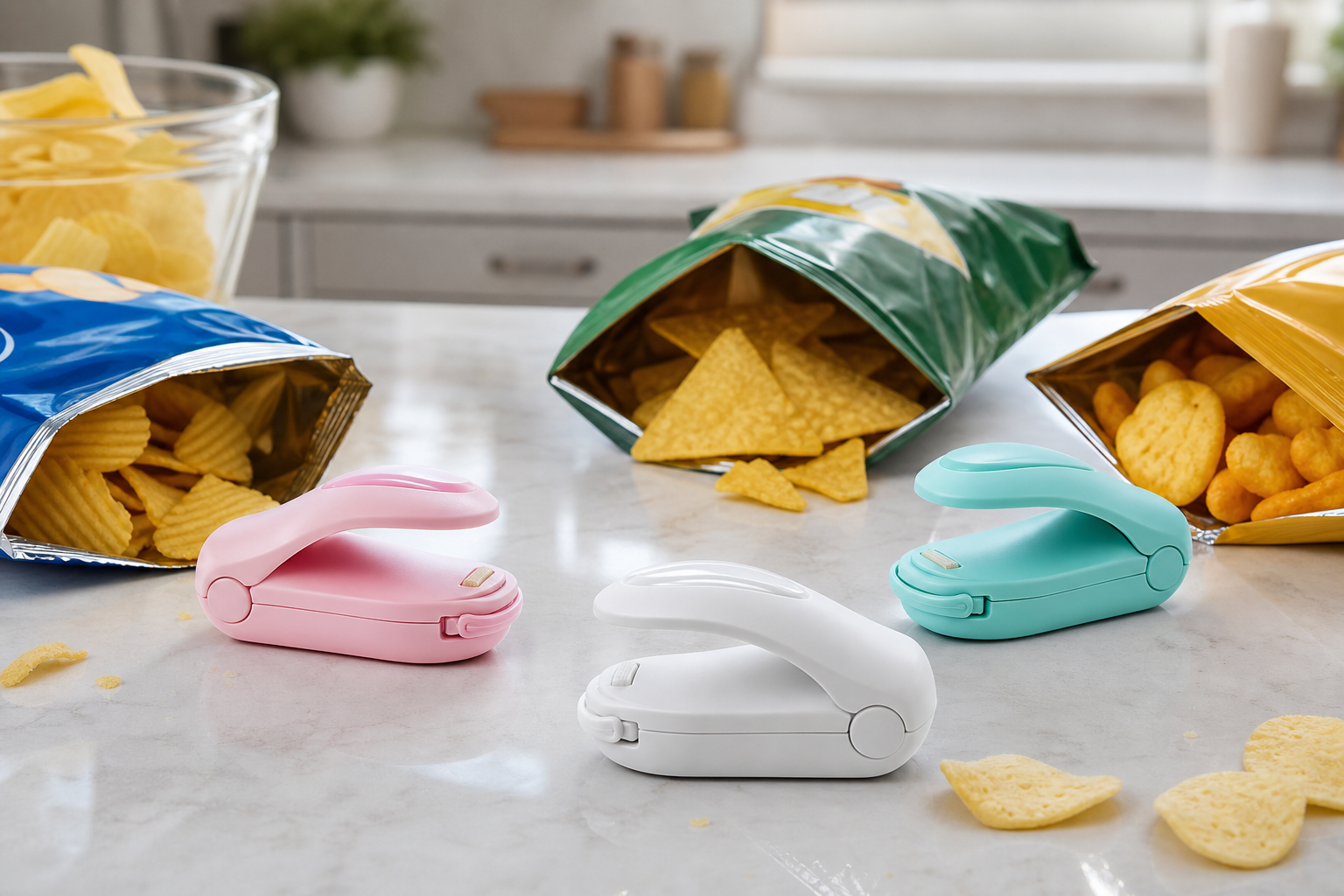
Prediction: mini handheld bag sealers are positioned to become one of the next small kitchen gadgets Amazon shoppers compare obsessively — not because they are flashy, but because they solve a daily annoyance that looks satisfying on video: closing half-used snack, cereal, frozen fruit, and pantry bags without hunting for clips.
Browse mini bag sealers on Amazon
Why Mini Bag Sealers Could Trend Next
Some Amazon trends start with a big promise. Others start with a tiny irritation people recognize instantly. Mini handheld bag sealers fall into the second group. Most kitchens have a drawer full of chip clips, rubber bands, twist ties, binder clips, and random plastic closures. They work, but they are not especially satisfying. They also do not always protect the full width of a bag, especially with thin snack packaging, frozen food bags, or awkward pantry pouches.
A mini bag sealer creates a different kind of appeal: slide a small heated tool across the open edge, and the bag looks closed again. It is visual, quick, and easy to demonstrate. That matters for social shopping. The product does not need a celebrity push to catch attention; the before-and-after is the hook.
This is not a claim that every mini sealer is great or that the category is exploding overnight. It is a practical prediction based on the same pattern behind other small kitchen and organization products: low price point, easy demo, visible mess reduction, and a clear “I could use that today” moment.
The Problem It Solves
The average pantry is not optimized. Bags get folded badly, clips disappear, cereal liners tear, freezer bags get icy, and snacks go stale because the opening was “good enough” last time. A sealer promises a cleaner close with less rummaging.
That promise is especially attractive in households with kids, roommates, meal preppers, snack drawers, or Costco-sized bags. It is also appealing for small kitchens where a bunch of clips and containers can create their own clutter. The sealer is not replacing airtight storage containers for everything; it is trying to make the original bag more usable for longer.
That puts it near other kitchen micro-upgrades we have covered, like countertop appliance sliders and silicone freezer meal-prep trays. The theme is not luxury. It is friction removal.
Who Will Buy Mini Bag Sealers First
Snack-heavy households
Families and shared households are obvious early buyers. If several people open chips, crackers, cookies, granola, dried fruit, and cereal in the same week, closure becomes a recurring problem. A mini sealer gives that problem a gadget-shaped answer.
Meal preppers and freezer organizers
Freezer bags and frozen food pouches are a different use case. Some shoppers will look at mini sealers as a way to close frozen fruit, vegetables, smoothie ingredients, or bulk items more neatly after partial use. It will not replace a full vacuum sealer, but the smaller size is part of the appeal.
Apartment and dorm kitchens
Small spaces reward compact tools. A full food storage system can be overkill in a dorm, studio apartment, or shared kitchen cabinet. A tiny sealer feels easier to justify than another bin of containers.
Organization-content shoppers
People who watch pantry restocks, lunch-packing videos, and kitchen reset clips are primed for products that make a drawer or shelf look cleaner. A sealed bag may not be as beautiful as matching containers, but it is cheaper, faster, and less fussy.
TikTok and Social Triggers
The strongest social trigger is the visible seal. A creator can show an open bag, slide the tool across it, flip the bag upside down, and show that it stays closed. That is a simple demonstration viewers understand without explanation.
The second trigger is pantry shame. Messy snack shelves are relatable. A video that turns ten half-open bags into neat sealed rows has the same emotional payoff as a cable-management clip or drawer reset. It gives viewers a small sense of control.
The third trigger is skepticism. Mini sealers are exactly the kind of product people argue about in comments: Does it actually work? Does it seal thick bags? Is it safer than clips? Does it break quickly? That debate can keep a product in circulation because shoppers want to see more tests before deciding.
Again, the right framing is not “viral miracle.” It is “testable, demonstrable, and cheap enough to compare.” That is often enough for an Amazon category to get momentum.
What to Look For When Buying
The category can vary a lot, so shoppers should compare carefully instead of buying only from the cutest photo.
- Power source: Some models use replaceable batteries, while others are rechargeable. Rechargeable can be convenient, but check whether the charging port and cable style fit your setup.
- Heat-up behavior: Many sealers need a short warm-up before use. If you expect instant sealing, read the instructions and reviews carefully.
- Sealing width: A wider sealing surface can feel more stable, but compact tools are easier to store.
- Safety features: Look for covers, locking mechanisms, or designs that reduce accidental contact with the heating strip.
- Bag compatibility: Not every plastic package behaves the same way. Thin snack bags, mylar-style packaging, freezer bags, and paper-lined bags can respond differently.
- Build quality: A cheap gadget is only useful if it still works after the novelty wears off.
Compare rechargeable mini bag sealers on Amazon
What to Avoid
Avoid any listing that implies one tiny sealer can replace proper food safety. Heat sealing a snack bag is not the same as canning, vacuum sealing, or making perishables shelf-stable. It is a closure tool for appropriate packaging, not a food preservation miracle.
Also avoid buying solely based on a staged upside-down demo. A seal may hold lightweight chips but struggle with thicker, greasy, crinkled, or coated materials. Real-world usefulness depends on the bags you actually use.
Be cautious with ultra-cheap multipacks if the listing gives little detail about safety, instructions, or materials. The gadget is small, but it uses heat. Shoppers should treat it with the same caution they would apply to any heated kitchen tool: follow instructions, keep it away from kids, and store it safely.
How It Compares With Other Pantry Fixes
Mini bag sealers are not the only answer. In many kitchens, the best setup is a mix of tools:
- Chip clips: Fast, reusable, and no heat involved. Less tidy on awkward bags.
- Airtight containers: Better for staples like flour, sugar, cereal, rice, and pet food. More expensive and space-hungry.
- Vacuum sealers: Stronger for freezer storage and bulk buying. Larger and more involved.
- Reusable zip bags: Great for portioning, but they require washing and a new habit.
- Mini bag sealers: Compact, satisfying, and useful for quick closures, but dependent on packaging compatibility.
That middle position is exactly why the trend prediction makes sense. It is not the most powerful solution; it is the easiest impulse upgrade. For many Amazon shoppers, that is enough to earn a test.
Amazon Buying Checklist
Before buying a mini bag sealer, run through this checklist:
- Does it clearly explain whether it is battery-powered or rechargeable?
- Does it include basic safety instructions and a protective cover or lock?
- Do reviews mention the same bag types you plan to seal?
- Are there complaints about weak heating, inconsistent seals, or short lifespan?
- Is the tool small enough to store where you will actually use it?
- Does the listing avoid unrealistic preservation claims?
- Would a simple clip or container solve your problem better?
That last question matters. A trend-worthy product still has to beat the boring alternative. If you only open one bag of chips a month, you probably do not need this. If your pantry always has five half-open bags, the case gets stronger.
Caveats Before the Hype Cycle
The biggest caveat is consistency. Some packages seal more cleanly than others, and user technique matters. Moving too quickly, starting before the tool is warm, or trying to seal a dirty or crumpled edge may produce weak results. That can turn an exciting demo into a drawer-clutter gadget.
The second caveat is safety. Because these tools use heat, they should be used carefully and stored away from children. A cute pastel shell can make the product look toy-like, but it is still a heated appliance.
The third caveat is overbuying. If TikTok-style organization content pushes mini sealers hard, shoppers may buy them as a shortcut to a perfect pantry. The better mindset is narrower: this is a small closure tool for specific bags, not a complete food-storage system.
Final Prediction
Mini handheld bag sealers have the right ingredients for a 2026 Amazon/TikTok kitchen trend: they are small, visually demonstrable, easy to compare, and tied to an annoyance most households already understand. They also fit the current appetite for low-cost organization tools that make everyday spaces feel more controlled.
The category will probably split into winners and disappointments. The best versions will be safe, easy to store, clear about power source, and realistic about bag compatibility. The weaker versions will overpromise, underheat, or become novelty drawer clutter.
Our prediction: mini bag sealers will not replace chip clips or storage containers, but they are likely to become one of those “wait, does this actually work?” Amazon finds that shoppers test, compare, and share — especially in snack-heavy kitchens.