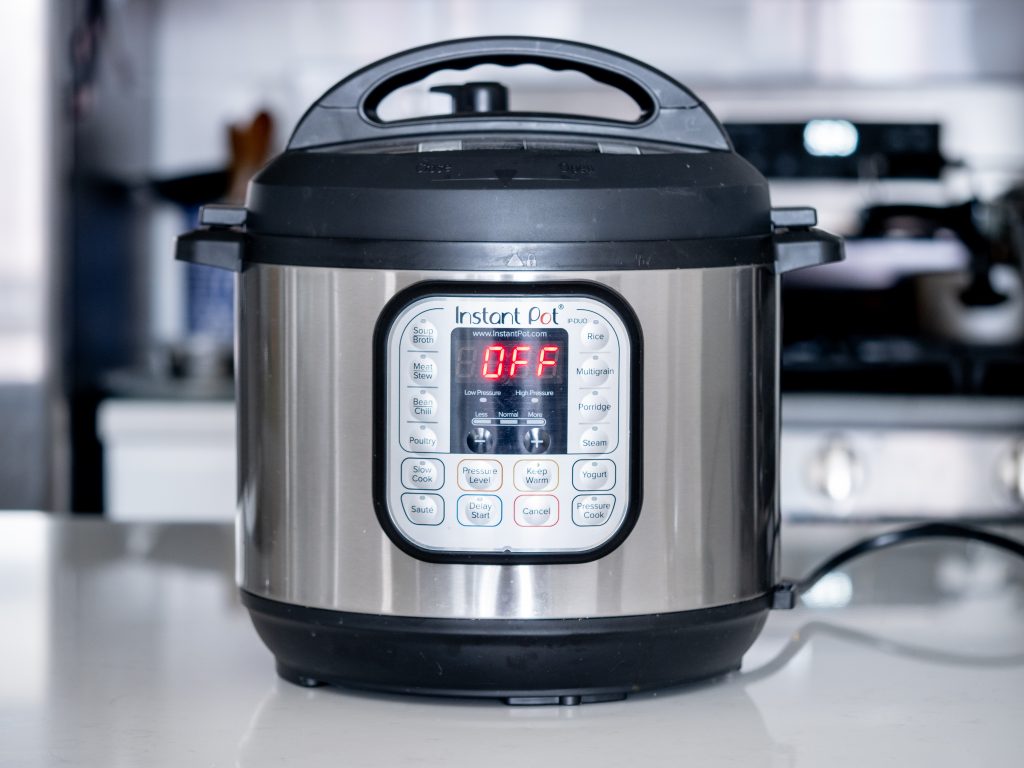

The Instant Pot Duo is still the fastest way to turn “we should eat at home” into an actual Tuesday-night dinner. It’s not magic, but it’s a remarkably consistent shortcut for beans, rice, shredded chicken, soups, and meal-prep staples—without babysitting a pot.
Quick Amazon check (affiliate search):
Compare sizes (3qt vs 6qt vs 8qt), then look for stainless inner pot + clear warranty language.
TL;DR
- Best for: meal-prep staples (rice/beans), hands-off braises, and weeknight “set it and forget it” dinners.
- Skip if: you hate bulky appliances or you mostly cook small portions (a 3qt may fit better).
- Amazon signal: the top “Instant Pot Duo” result commonly shows ~4.6/5 with ~183k ratings (snapshot taken today from Amazon search results).
Who it’s for / Who should skip
It’s for you if…
- You want reliable “one appliance, many jobs” cooking: pressure cook + slow cook + rice + sauté.
- You meal prep and you care about consistency more than chef-y vibes.
- You like cooking beans/lentils from dry (cheaper, less packaging, better texture when dialed in).
Skip (or size down) if…
- Counter space is tight and you won’t store it.
- You mostly cook for 1–2 people and rarely batch-cook—consider a smaller 3qt model instead of 6qt.
- You want crisping/air-frying built in (that’s more “Duo Crisp” territory, not the base Duo).
Pros / Cons (honest)
Pros
- Fast, repeatable results for staples (rice, beans, shredded meats, soups).
- Stainless inner pot is durable and easy to scrub compared with nonstick coatings.
- Sauté function means fewer pans (brown first, then pressure cook).
- Huge recipe ecosystem (good and bad, but helpful for beginners).
Cons
- Bulky footprint; if it lives in a cupboard you’ll use it less.
- Learning curve: timing isn’t just “cook time” (it includes heat-up + pressure release).
- Not a crisping machine (unless you add a separate air-fryer lid or buy a different model).
- Some foods don’t benefit (steaks, delicate fish, anything you want browned and crunchy).
What we looked at (specs, complaints, warranty friction)
Core idea: a sealed pot builds pressure so water boils at a higher temperature, cooking faster. Electric pressure cookers add electronic control and safety interlocks compared with stove-top models.
- Sizes that matter: 3qt for small households, 6qt as the default “family” size, 8qt if you batch cook big cuts or soup stock.
- Inner pot material: stainless (durability, no coating to flake), typically dishwasher-safe.
- Common complaints: sealing ring odor retention, steam release mess if positioned under cabinets, and “burn” warnings when recipes are too thick or under-liquid.
- Warranty/returns friction: multicookers are heavy; keep the box for the first couple weeks and test the sealing ring + pressure cycle early.
Buying checklist: what to look for
- Right size for your lifestyle: 6qt is the sweet spot for most; 3qt if you hate leftovers; 8qt if you meal prep for a week.
- Stainless inner pot: easier long-term maintenance than nonstick.
- Spare sealing ring availability: budget for a second ring (savory vs sweet) if you cook strongly flavored foods.
- Clear replacement parts: rings, steam valves, and inner pots should be easy to buy.
Amazon links (2–4 total)
- Instant Pot Duo (6qt) — Amazon search
- Instant Pot Duo Mini (3qt) — Amazon search
- Replacement sealing rings — Amazon search
- Alternative: Ninja Foodi pressure cooker — Amazon search
More helpful reads on MustGrabThat
- Pillar: Best TikTok Home Upgrades (2026)
- Roundup: 15 TikTok-to-Amazon Finds That Are Actually Worth It (2026)
- Related review: ThermoWorks Thermapen ONE review
Sources / citations
- Wirecutter: Best Electric Pressure Cooker
- Wikipedia: Instant Pot
- Wikipedia: Pressure cooking (why it’s faster)
- Instant Brands / Instant Pot (manufacturer)
Disclosure: As an Amazon Associate we earn from qualifying purchases.