
Hook: most “portable power stations” are either too weak to be useful or so big you never grab them
The EcoFlow RIVER 2 sits in a sweet spot: small enough to live in a cupboard (or the car), but powerful enough to solve real problems—keeping your phone and laptop alive, running a router during an outage, powering lights on a campsite, or making sure your CPAP doesn’t become a “hope you sleep” situation.
It’s not the biggest battery you can buy. The point is that it’s the one you’ll actually take with you because it charges fast, doesn’t weigh a ton, and has a clean set of ports.
CTA: If you want a compact, reputable starter power station for home backup basics or light travel, RIVER 2 is one of the simplest “buy once and stop thinking about it” picks in 2026.
TL;DR
- Best for: laptops, phones, camera batteries, small fans/lights, and keeping a modem/router online during short outages.
- Key spec vibe: compact capacity + fast recharge + safe chemistry (LFP) = convenient, not just theoretical.
- Not for: kettles, heaters, air fryers, or anything that’s basically a space heater with a different name.
Who this is for (and who should skip)
RIVER 2 is for you if you:
- Want a small emergency backup for essentials (phones, lights, Wi‑Fi, small medical devices as appropriate).
- Work from a laptop and need an “I can finish the call” battery during a blackout.
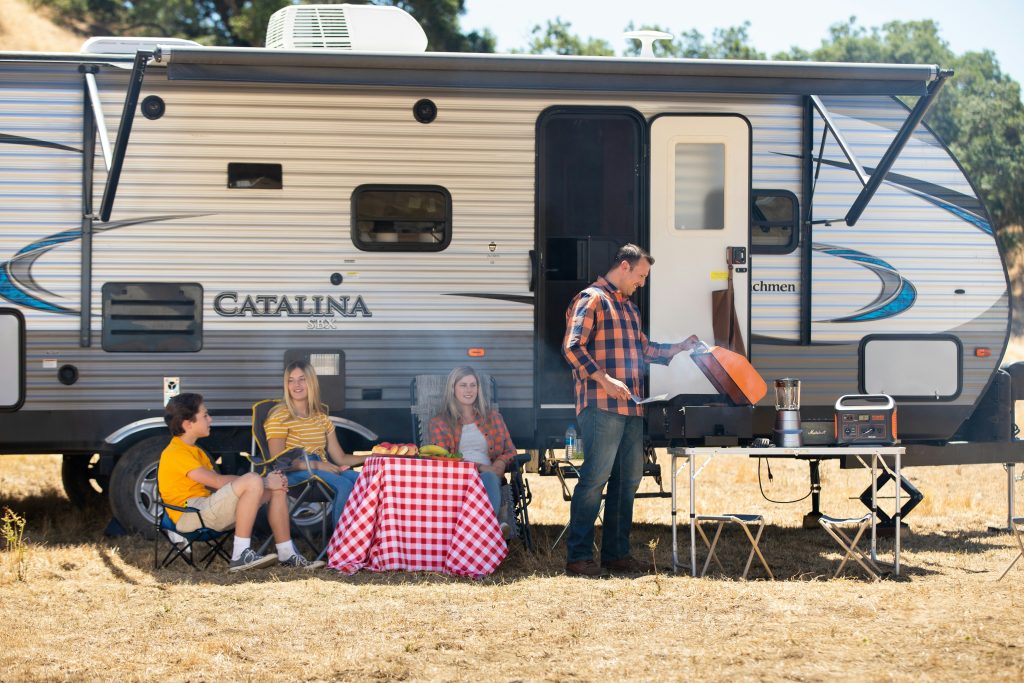
- Camp, road trip, or do day trips and want quiet power without a generator.
- Care about battery longevity and prefer LFP over older lithium chemistries for long cycle life.
Skip it (or size up) if you:
- Need to run high‑watt kitchen gear (microwave, kettle, toaster, air fryer), power tools, or a full desktop/gaming setup.
- Expect multi‑day outages and want a “whole-day essentials” battery—look at larger capacity models in the RIVER/DELTA lines instead.
- Need a dedicated UPS with seamless switchover for sensitive equipment (EcoFlow has EPS/UPS-like modes, but if you’re protecting servers, buy a real UPS).
Pros & Cons (the real ones)
Pros
- Fast recharge is the killer feature. A power station that recharges quickly gets used more often—because you don’t spend a whole day “prepping” it.
- Portable enough to grab. This matters more than people admit. If it’s awkward, it stays at home.
- LFP battery chemistry. Better long-term durability (cycle life) than older-style packs, per EcoFlow’s stated specs.
- Simple, modern port mix. USB + AC + DC in a tidy layout, with a readable display.
Cons
- Capacity is modest. It’s meant for essentials and short runs, not heavy appliances.
- Power limits are real. If you constantly bump into the wattage ceiling, you bought the wrong size.
- Fans and inverter noise exist. It’s usually quiet, but under heavier loads you’ll hear it.
What we looked at (how to judge a small power station)
With compact power stations, the “best” one isn’t the one with the most marketing—it’s the one that fits how you’ll actually use it. Here’s the framework:
- Capacity (Wh): how much energy you have to spend.
- Continuous output (W): what you can run without tripping the inverter.
- Recharge time: how quickly you can get back to 100% from the wall.
- Battery chemistry & cycle life: whether it’ll still be healthy after years of normal use.
- Port selection: whether it matches modern devices (USB‑C matters).
- Use case honesty: emergency “keep the basics alive” vs “run the kitchen.”
EcoFlow RIVER 2 in plain English: what it will (and won’t) run
Great matches:
- Phone charging for a household (multiple times)
- Laptop charging (multiple times, depending on battery size)
- LED lamps, string lights, small fans
- Wi‑Fi modem/router (often for hours)
- Camera/drone batteries (nice “charging hub” on trips)
Bad matches:
- Kettles, toasters, air fryers, hair dryers, heaters (high wattage)
- Anything with a heating element you expect to run for long
- Big fridges/freezers for extended time (startup surge and runtime reality)
Rule of thumb: if the product’s job is to create heat, it’s usually not a great fit for a small power station.
Quick checklist: using a portable power station safely and effectively
- Do a test run now, not during the outage. Plug in your modem/router setup and see what the display says for watts.
- Charge it monthly (or set a reminder). Batteries like being used and topped up—not abandoned for a year.
- Keep it ventilated. Don’t bury it under jackets in the car while running a load.
- Know your cable plan. Keep the AC adapter/charging cable with the unit so it’s always ready.
- Don’t chase “X‑Boost” numbers. If you need high continuous power, buy a bigger unit instead of living on marketing modes.
Internal links (helpful next reads)
- Reviews (what’s actually worth buying)
- Home Upgrades (practical fixes that improve day-to-day life)
- Amazon Finds (popular products worth cross-checking)
Sources
- EcoFlow: Official site (product pages and specs vary by region)
- EcoFlow: RIVER 2 product page (US) (capacity, output, recharge claims, battery chemistry)
FTC disclosure
If you buy through links on this site, we may earn a commission at no extra cost to you. We only recommend products we believe are genuinely worth it.